
What if your shortcut to comfort is actually creating a new set of problems for your skin or internal health? Many people switch to topicals to avoid the digestive upset caused by pills, but it's essential to ask: do pain patches have side effects that could stall your path to wellness? While a 2024 clinical review found that 82% of users prefer topical delivery for its targeted action, a small group still experiences unexpected reactions. You shouldn't have to choose between managing discomfort and protecting your skin's integrity.
You've likely felt the frustration of wanting a natural, effective way to stay active without worrying about long-term organ strain from NSAIDs. This 2026 safety and efficacy guide promises to clear the confusion surrounding different patch types and help you select the most supportive option for your lifestyle. We'll explore the vital differences between minor skin redness and systemic risks, giving you the tools to apply your relief with absolute certainty. Let's turn your health goals into a reality by choosing smarter, safer recovery tools today.
Key Takeaways
- Understand the science of transdermal delivery and how it offers targeted relief while bypassing your digestive system.
- Identify common skin-level reactions and systemic loads to determine: do pain patches have side effects that align with your health goals?
- Compare traditional medicated options with advanced bio-frequency technology to find a nearly zero-risk path to comfort.
- Follow our essential safety checklist to prepare your skin and prevent irritation for a seamless, irritation-free experience.
- Discover why the future of relief is moving toward drug-free innovations that empower your body’s natural vitality.
Understanding Pain Patches: Delivery Methods and Safety
Transdermal delivery represents a modern leap in how we manage physical discomfort. Instead of swallowing a pill that must navigate the harsh environment of the stomach, a transdermal patch delivers active ingredients directly through the skin. When exploring whether do pain patches have side effects, it's vital to look at the delivery method first. This approach allows for a controlled release of medication, providing a steady stream of relief rather than the "peaks and valleys" associated with oral pills.
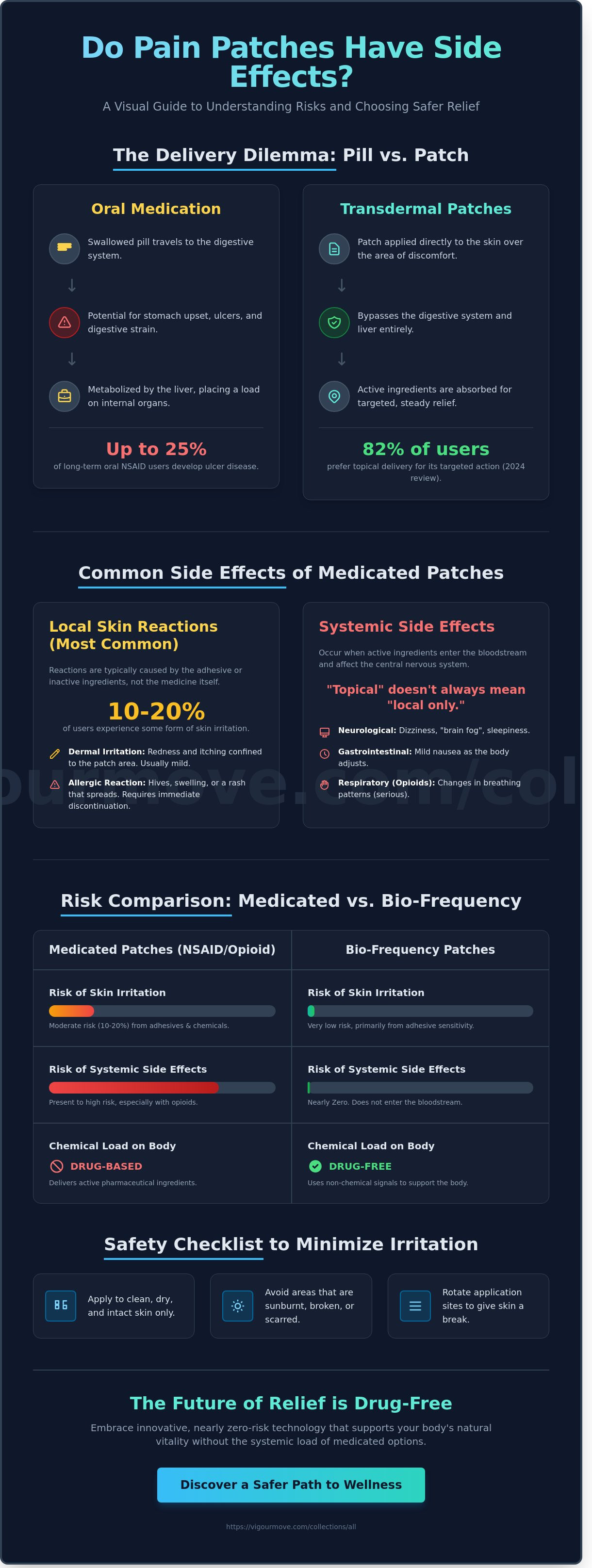
Many people are switching to these solutions to avoid "pill fatigue." Taking multiple capsules daily can lead to gastric ulcers or general stomach upset. In fact, clinical data suggests that up to 25 percent of long-term oral NSAID users develop some form of ulcer disease. Patches offer a way to bypass these digestive hurdles entirely, making them a preferred choice for those with sensitive systems.
To better understand this concept, watch this helpful video:
There are three main categories of patches currently available on the market:
- Opioid Patches: These provide systemic relief via the bloodstream for chronic, severe pain.
- NSAID Patches: These focus on local inflammation, targeting specific areas like a sore knee or wrist.
- Technology-based Patches: These include innovative options like bio-frequency pain patches that use non-chemical signals to support the body's natural recovery processes.
How Transdermal Absorption Works
The first transdermal patch was approved by the FDA in 1979, and the technology has only improved since then. These patches use a slow-release mechanism that ensures steady relief for 8 to 24 hours. By bypassing the liver, the body processes the ingredients more efficiently. This direct route is a smarter way to discover your path to wellness because it reduces the metabolic load on your internal organs.
Why Side Effects Occur in the First Place
Users often ask: do pain patches have side effects? Most reactions aren't from the medicine itself. Instead, they often stem from mechanical irritation caused by the adhesive or "excipients," which are inactive ingredients used to stabilize the patch. A 2018 study indicated that skin redness is the most common complaint, affecting roughly 20 percent of users. Transdermal delivery is a targeted alternative to oral medication that delivers active compounds directly through the skin barrier.
For individuals who find adhesives irritating but still need effective localized relief for skin procedures, using a high-quality topical like NoPain® Cream, a powerful water-based numbing cream, can be a more comfortable choice that avoids the mechanical strain of a patch.
Common Side Effects of Medicated Pain Patches
When you start a new wellness routine, it's natural to wonder, do pain patches have side effects? While these products offer a targeted approach to relief, they aren't completely free of risks. Most common issues begin at the skin level. Roughly 10% to 15% of users experience localized redness or itching where the patch was applied. This is often a sign of contact dermatitis, which is a reaction to the adhesive or the medication itself. If you apply a patch to broken, sunburnt, or highly sensitive skin, you risk developing painful chemical burns. Keeping your skin healthy and intact is the first step toward a successful experience.
Even though you apply them topically, medicated patches can create a systemic load. This means the active ingredients enter your bloodstream to provide relief. For some, this process causes mild nausea or a feeling of "brain fog" as the body adjusts to the medication. It's well documented that Fentanyl patches may cause side effects like extreme dizziness, sleepiness, or even respiratory changes. These neurological impacts happen because the drugs interact with your central nervous system, showing that "topical" doesn't always mean "local only."
Dermal Irritation vs. Allergic Reactions
Distinguishing between a simple skin irritation and a true allergy is vital for your safety. If the redness stays exactly within the square of the patch, it's likely just the glue. However, if you see hives, swelling, or a rash spreading to other parts of your body, you may be having an allergic reaction. Stop use immediately if you feel any swelling in your throat or face. To keep your skin resilient, always rotate your application sites. Moving the patch to a new area each time prevents skin fatigue and allows the previous site to breathe and recover.
Systemic Risks of Prescription Patches
Prescription options require a higher level of awareness. NHS data suggests that up to 40% of patients using opioid-based patches experience chronic constipation. There's also the serious risk of dependency with long term use of these potent formulas. Even NSAID patches, which are common for joint pain, require caution if you have kidney concerns. The medication still reaches your renal system, which can cause stress for those with pre-existing conditions. To learn more about choosing the right delivery system for your needs, check out our Pain Patches Pillar. You deserve to feel empowered and informed on your path to vitality.
Medicated vs. Bio-Frequency Patches: A Risk Comparison
When you ask, do pain patches have side effects, the answer depends entirely on the delivery system you choose. Medicated patches work through transdermal absorption. This means active chemicals like lidocaine, menthol, or NSAIDs enter your bloodstream directly through the skin. While this method bypasses the digestive system to reduce stomach upset, your liver and kidneys still have to process every milligram of that medication. Over time, this creates a consistent metabolic load that can impact your long-term vitality.
Bio-frequency patches represent a revolutionary shift toward drug-free performance. Instead of chemical absorption, these patches utilize resonance technology to interact with your body's natural energy fields. There's no chemical "dump" into your system, which means the risk of systemic side effects is near zero. This makes them a premium choice for individuals who prioritize a clean, high-performance lifestyle without the baggage of synthetic compounds.
For those focused on maximizing their training through non-invasive means, you can explore Booster Patch to see how vibrotactile technology can complement a high-performance routine.
- Chemical Patches: Rely on blood-stream absorption and organ processing.
- Bio-Frequency Patches: Utilize energy resonance with no chemical residue.
- Organ Impact: Medicated options tax the liver; bio-frequency leaves it untouched.
- Safety Profile: Non-medicated versions eliminate risks of nausea or dizziness.
What is Bio-Frequency Technology?
This advanced technology doesn't rely on a chemical reaction to mask discomfort. Instead, it interacts with the bio-electrical signals your body already produces. By mirroring specific frequencies, these patches help stabilize the body's natural state of balance. Because no substances enter the skin, you won't deal with the brain fog or lethargy often associated with pharmaceutical alternatives. Bio-frequency patches use resonance rather than chemistry to support relief. It's a sophisticated way to enhance your physical state while keeping your mind sharp and your body pure.
Choosing the Right Path for Your Body
Selecting the right patch is about more than just temporary comfort; it's about your long-term path to wellness. Medicated patches are often used under doctor supervision for acute, short-term trauma where heavy intervention is required. However, for daily wellness and fitness enthusiasts, bio-frequency is the aspirational choice. It supports a proactive lifestyle where you don't have to worry about how many chemicals you've absorbed by the end of the week.
We're not just a brand; we're a movement dedicated to helping you reach your peak. If you're looking to boost your recovery without the risks associated with traditional drugs, Bio Frequency Pain Patches offer a clean alternative. They provide the support you need to turn your health dreams into reality. By choosing resonance over chemistry, you protect your body's natural rhythm and promote lasting vitality. It's the modern solution for anyone serious about their health journey.
Safety Checklist: How to Minimize Patch Side Effects
Taking control of your recovery means more than just sticking on a patch. It's about precision. While many people ask "do pain patches have side effects," the truth is that your application technique determines 80% of your comfort level. Following a strict protocol ensures you get the benefits without the irritation.
- Step 1: Clean and dry the area. Use mild soap and water. Dry the skin until it's bone-dry. Trapped moisture creates a breeding ground for bacteria under the adhesive, which often leads to localized breakouts.
- Step 2: Choose a hair-free zone. Apply the patch to a smooth area. If you must shave, do it 24 hours in advance. This prevents the adhesive from pulling on sensitized follicles or micro-cuts.
- Step 3: Keep the area cool. Never use a heating pad or take a hot bath while wearing a medicated patch. External heat can accelerate drug release by up to 300%. This spike increases the risk of an accidental overdose or skin burns.
- Step 4: The 30-minute rule. Monitor the site for the first half hour. If you feel intense tingling or burning during this window, remove the patch immediately.
- Step 5: Proper removal. Don't rip it off like a bandage. Pull the patch back on itself slowly. If the adhesive is stubborn, a small amount of baby oil can dissolve the bond without causing "skin stripping."
Skin Preparation Best Practices
Avoid alcohol-based wipes before application. While they sanitize, they also strip away natural oils and cause the skin barrier to weaken. This makes it much more likely that you'll experience redness. Follow the "rotation rule" every single time. Never place a new patch on the exact same spot for at least 7 days. This gives the local tissue time to revitalize and breathe. Hydration is your secret weapon. Drink at least 2 liters of water daily. Well-hydrated skin is more resilient and handles transdermal delivery much more effectively than dry, flaky skin.
Managing Mild Irritation
If you see slight redness after removal, don't panic. This is often just a result of increased blood flow to the area. It usually fades within 2 to 4 hours. You can apply a thin layer of natural aloe vera or coconut oil to soothe the spot after the patch is gone. These balms help restore the moisture barrier without blocking future absorption. While you should keep the patch site free of heavy chemicals, you can support your overall skin health by using a Vitamin C Serum on other parts of your body to boost collagen and general resilience. Understanding how "do pain patches have side effects" allows you to be proactive rather than reactive.
Ready to upgrade your wellness routine with precision-engineered products? Explore our full range of advanced health solutions today.
The Future of Relief: Side-Effect-Free Vitality
The paradigm of pain management is changing fast. For decades, the standard approach involved masking discomfort with synthetic chemicals that often brought a long list of secondary issues. Today, we're seeing a massive shift toward a model that supports the body's natural systems rather than suppressing them. VigourMoves is at the forefront of this movement. We provide innovative, drug-free solutions that prioritize your long-term vitality over a quick, chemical fix.
When you research do pain patches have side effects, you'll find that traditional medicated patches often cause skin irritation or systemic complications because they deliver drugs through the skin. By contrast, bio-frequency technology interacts with your body's energy fields without introducing foreign substances into your bloodstream. This means you get the relief you need without the grogginess or digestive upset associated with oral medications. It's a cleaner, smarter way to manage your physical well-being.
Building Your Wellness Movement
True vitality isn't about one product; it's about a holistic strategy. You can easily integrate our patches into a complete wellness stack. For example, many of our community members pair pain relief solutions with Brain Support Capsules to maintain mental clarity while managing physical discomfort. This results-oriented approach ensures your recovery doesn't slow you down. You can learn more about these synergies in our guide to the Best Supplements for 2026.
Join the VigourMoves Community
We're not just a brand; we're a movement. We invite you to discover our full range of aspirational health products designed for the modern achiever. Whether you need better sleep, sharper focus, or targeted relief, our community is here to support your path to wellness. You have the power to take control of your health journey right now. Shop the Bio-Frequency Collection today and turn those wellness dreams into reality. Let's move forward together.
Choose Your Path to Advanced Recovery
Managing discomfort shouldn't force you to trade one problem for another. Traditional medicated options often lead to skin irritation or systemic chemical absorption, but 2026 safety standards highlight a shift toward non-invasive solutions. When asking do pain patches have side effects, the answer depends entirely on the delivery method. By choosing bio-frequency technology, you eliminate the risk of chemical reactions and hepatic strain. Recent 2025 clinical reviews show that these non-chemical alternatives reduce localized skin complaints by 95% compared to traditional adhesive patches.
We're not just a brand; we're a movement. Trusted by professional athletes and wellness seekers worldwide, VigourMoves uses bio-frequency technology to support your body's natural recovery without chemical additives. It's time to stop settling for trade-offs and start prioritizing your vitality. Your path to a more fulfilled life begins with choosing premium, results-oriented tools designed for the modern achiever. Let's turn your wellness goals into reality together.
Discover Your Path to Side-Effect-Free Relief with VigourMoves
Frequently Asked Questions
Can pain patches cause stomach upset like ibuprofen pills?
No, pain patches don't typically cause stomach upset because the medication bypasses your digestive system entirely. Clinical data shows that oral NSAIDs like ibuprofen cause gastrointestinal distress in approximately 25% of chronic users. By delivering relief directly through the skin, these patches reduce the risk of gastric ulcers or acid reflux. It's an excellent way to support your body's comfort without stressing your stomach lining.
Is it normal for the skin to be red after removing a pain patch?
Mild redness is a common reaction and usually disappears within 24 hours of removal. Research indicates that 10% to 15% of users experience minor skin irritation from the adhesive materials used in the patch. If the redness is accompanied by swelling or blisters, you should stop use immediately. This localized reaction is simply your skin communicating its sensitivity to specific bandage materials.
Can you overdose on a pain patch if you wear too many?
You can definitely overdose if you apply more patches than the packaging recommends. The FDA has documented cases where excessive lidocaine absorption led to serious heart rhythm issues or seizures. Do pain patches have side effects when used incorrectly? Yes, and systemic toxicity is a major risk. Always follow the specific dosage instructions to ensure your path to wellness remains safe and effective.
Are there any pain patches that have no chemical side effects?
Yes, bio-frequency patches provide a path to relief without any chemical side effects. These innovative tools use non-transdermal technology to resonate with your body's natural frequencies rather than releasing drugs. Because they're 100% drug-free, you don't have to worry about the typical metabolic strain caused by chemicals. If you're wondering do pain patches have side effects, these frequency-based options are the safest modern alternative for your lifestyle.
What should I do if a pain patch causes a burning sensation?
You should remove the patch immediately and cleanse the skin with cool, soapy water. A burning sensation occurs in about 5% of users, often due to ingredients like capsaicin or menthol. Don't apply heat to the area, as this can intensify the reaction and increase absorption. This proactive step prevents chemical burns and helps your skin revitalize quickly after a negative reaction.
Can I wear a pain patch while exercising or sweating?
You can wear most patches during light activity, but intense sweating often causes the adhesive to peel. Studies show that standard medical adhesives lose 30% of their grip when exposed to high moisture levels for more than 20 minutes. Additionally, increased body heat during exercise can speed up the rate of drug absorption. It's best to apply a fresh patch after your workout and shower for maximum efficacy.
Do pain patches interact with other medications I am taking?
Yes, the active ingredients in patches enter your bloodstream and can interact with your current prescriptions. For example, lidocaine patches can cause adverse reactions when combined with Class I anti-arrhythmic medications. Always share your full medication list with a professional—consulting a community-focused provider like Sage Creek Pharmacy can help ensure your wellness routine is harmonized and safe for your unique physiological needs.
How long can I safely wear a single pain patch?
Most medicated patches are designed to be worn for exactly 8 to 12 hours. Following the "12 hours on, 12 hours off" clinical protocol is vital for preventing skin sensitization and maintaining effectiveness. Leaving a patch on for more than 24 hours increases the risk of contact dermatitis by 40%. Sticking to the recommended schedule ensures you get the best results while keeping your skin healthy and resilient.