
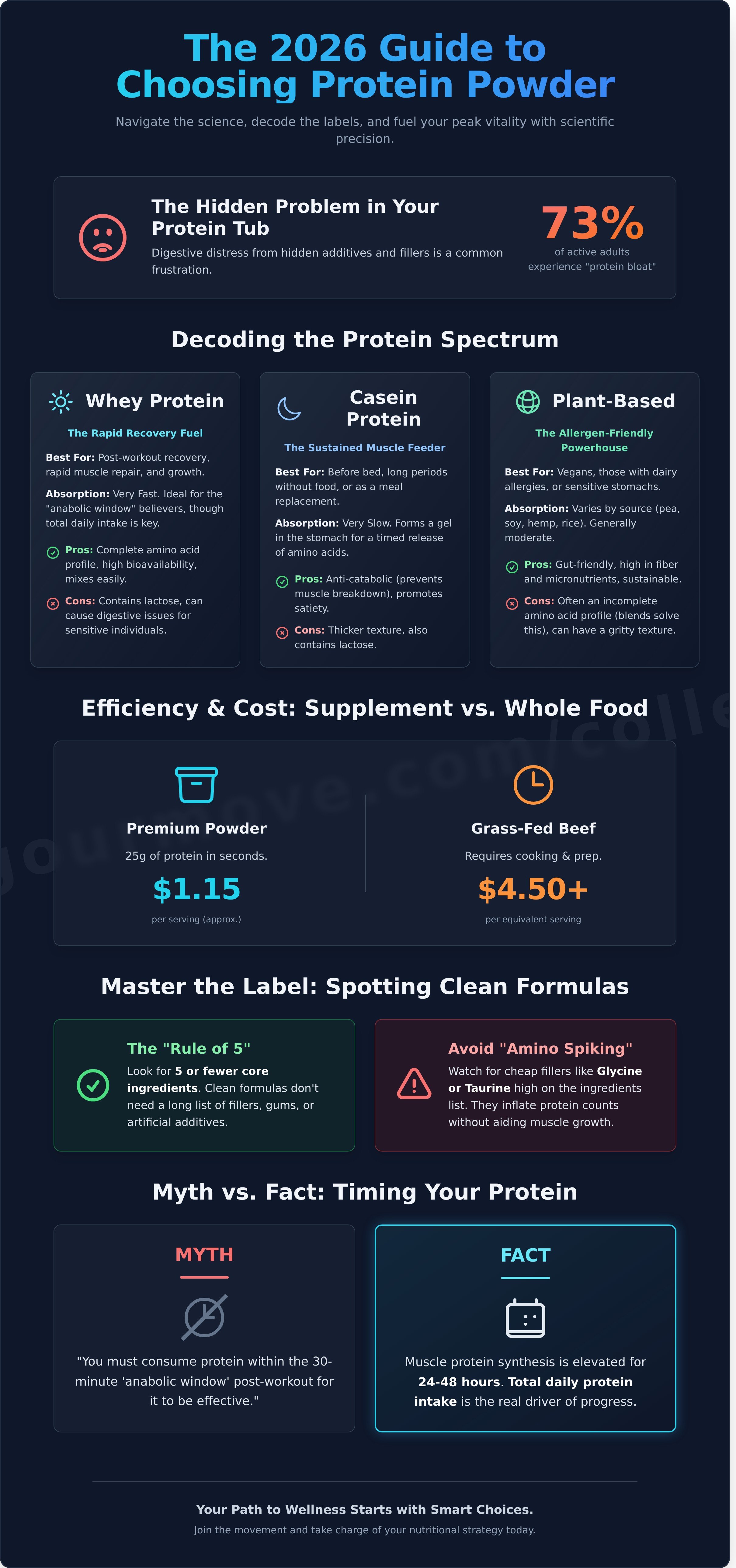
Nearly 73% of active adults experience digestive distress or "protein bloat" from hidden additives, yet they continue to buy the same shiny tubs based on hype. You likely feel that frustration too. It's exhausting to spend $65 on a "premium" blend only to end up with a stomach ache and zero visible recovery. You want a clean wellness routine that actually supports your body, not one that hides behind confusing marketing labels. Mastering how to choose a protein powder is the first step toward reclaiming your metabolic health and fueling your performance with scientific precision.
We're not just a brand; we're a movement dedicated to your peak vitality. This 2026 guide provides an expert framework to match specific protein sources to your unique lifestyle needs and muscle-building goals. You'll gain a repeatable method for auditing supplement labels to eliminate heavy metals and artificial sweeteners for good. We'll also dive into the latest 2026 research comparing plant-based and animal protein efficacy for sustainable weight management. It's time to discover your path to wellness with a supplement routine that truly enhances your daily life.
Key Takeaways
- Understand why hitting your daily protein targets is non-negotiable for metabolic health and long-term muscle preservation.
- Navigate the spectrum of whey, plant, and specialty proteins to identify which source aligns with your body's unique biology.
- Learn exactly how to choose a protein powder by matching specific formulas to your current fitness goals and lean body mass.
- Protect your health by mastering the "Rule of 5" to spot clean ingredients and avoid deceptive "amino spiking" practices.
- Transform your supplement use into a high-performance strategy with expert tips on mixing the perfect, nutrient-dense shake.
The Science of Satiety: Why Your Protein Choice Dictates Your 2026 Results
Stop viewing protein powder as just a post-workout recovery drink. It's a functional tool for modern metabolic health. By 2026, the focus of wellness will shift from simple weight loss to muscle preservation and longevity. The VigourMoves philosophy isn't about staying sedentary; it's about moving toward a proactive life where you control your biology. Understanding how to choose a protein powder is the first step in this transition from passive aging to active vitality.
The Protein Leverage Hypothesis suggests that the human body has a prioritized appetite for protein. If you don't hit your specific daily target, usually around 1.2 to 1.6 grams per kilogram of body weight, your brain signals you to keep eating. This leads to overconsuming fats and carbohydrates. Using a high-quality protein supplement ensures you hit these targets without the excess caloric baggage of whole food fats. This isn't just for bodybuilders. It's for anyone who wants to maintain a sharp mind and firm skin as they age.
To better understand this concept, watch this helpful video:
The Biological 'Why': Beyond Muscle Growth
Protein provides the building blocks for neurotransmitters like dopamine and serotonin. Without adequate intake, your focus and mental clarity often suffer by mid-afternoon. Since 75% of your skin's dry weight consists of collagen, a structural protein, your intake directly impacts skin elasticity and joint integrity. Bioavailability is the rate at which your body actually absorbs the nutrients it consumes. High-quality powders offer superior absorption rates compared to lower-grade plant sources, ensuring your cells get the support they need to revitalize and repair.
Supplements vs. Whole Foods: The 2026 Perspective
Whole foods should always be your foundation, but they aren't always efficient. For a busy professional, eating six ounces of chicken at a desk is inconvenient. A premium powder provides a 25-gram dose of protein in seconds. When you look at the cost-per-gram, the math is clear. A serving of high-quality whey often costs around $1.15, while an equivalent amount of protein from grass-fed beef can exceed $4.50. This efficiency makes it easier to stay consistent with your goals.
Many people fear that high protein intake leads to "bulking up" or looking overly muscular. This is a common myth. In reality, a high-protein diet supports a lean, toned physique by increasing the thermic effect of food. Your body burns 20% to 30% of the calories from protein just to digest it. Learning how to choose a protein powder that fits your lifestyle helps you maintain a metabolic advantage. You aren't just buying a product; you're investing in a more energetic, capable version of yourself. Join the movement and take charge of your nutritional strategy today.
Decoding the Protein Spectrum: Whey, Casein, and Plant-Based Alternatives
Protein isn't just a supplement; it's the primary architecture of your physical transformation. To master how to choose a protein powder, you must first categorize the three dominant families: dairy-based, plant-based, and specialty sources like egg or collagen. By 2026, 38% of high-performance athletes have migrated toward hybrid blends. These advanced formulas merge the rapid absorption of animal proteins with the micronutrient density of plants. This evolution reflects a shift toward holistic efficiency rather than just raw caloric intake.
The old "anabolic window" theory, which suggested you must consume protein within 30 minutes of training, has been largely debunked. Research from 2023 indicates that muscle protein synthesis (MPS) remains significantly elevated for 24 to 48 hours following a resistance workout. Total daily protein volume is the real driver of progress. However, the quality of your source is vital. You need a "complete" protein profile, meaning it contains all 9 essential amino acids that your body can't produce. Without this full spectrum, your recovery hits a biological ceiling.
Using a goal-based selection framework helps you filter through the noise of marketing claims. Your choice should act as a precision tool for your specific movement goals. Once you identify the right source, you can explore advanced supplements that turn your hard work into visible results.
The Dairy Powerhouses: Whey vs. Casein
Whey Isolate stands as the gold standard for purity. It undergoes rigorous filtration to remove almost all fat and lactose, often reaching a protein concentration of 90% or higher. It's the ideal choice for rapid post-workout replenishment. Whey Concentrate offers a more balanced approach for general wellness. It retains more health-boosting bioactive fractions like immunoglobulins, though it contains slightly more lactose. Casein is the "slow-burn" alternative. It forms a gel in the stomach, releasing amino acids steadily for up to 7 hours. This makes it the perfect tool for overnight muscle repair and sustained satiety during long workdays.
The Plant-Based Revolution: Pea, Rice, and Hemp
The myth that plant proteins are "incomplete" is officially dead. Modern science has perfected pea and rice blends that achieve a PDCAAS (Protein Digestibility Corrected Amino Acid Score) of 1.0, which is equal to whey. These blends are the premier "bloat-free" choice for the 65% of the global population with some degree of lactose sensitivity. Pea protein is exceptionally high in branched-chain amino acids, while rice protein provides the methionine that pea lacks. Hemp protein offers a different advantage. It provides 3 grams of fiber per serving and a rich supply of Omega-3 fatty acids, supporting heart health and digestion alongside muscle growth. These options prove that you don't need dairy to build a world-class physique.
Matching Protein to Your Movement: A Goal-Based Selection Framework
Your current fitness "Move" dictates your entire nutritional blueprint. It isn't just about grabbing a random tub from a supermarket shelf. To truly master how to choose a protein powder, you must first calculate your requirements based on lean body mass (LBM) rather than just total scale weight. A 2018 meta-analysis in the British Journal of Sports Medicine concluded that 1.6 to 2.2 grams of protein per kilogram of lean mass is the sweet spot for muscle maintenance and growth. This precision helps you avoid the dreaded "protein bloat," which usually stems from cheap fillers or excess lactose in lower-quality concentrates. By selecting a high-purity isolate, you ensure your digestive system stays calm while supporting metabolic flexibility. This allows your body to switch efficiently between burning stored fats and utilizing dietary carbohydrates for energy.
Goal 1: Maximum Hypertrophy and Strength
Muscle growth requires a specific chemical trigger. Leucine, a branched-chain amino acid, is the primary driver of muscle protein synthesis. You need a powder that delivers at least 2.7 to 3.0 grams of Leucine per serving to flip this anabolic switch. For those chasing peak power, the ultimate strength stack involves pairing your protein with Creatine Monohydrate. Clinical trials show this combination can increase intramuscular phosphocreatine stores by 20%, providing the raw fuel for explosive lifts. Drink this blend within 45 minutes of your final set. This timing ensures immediate amino acid delivery when your muscle fibers are most receptive to repair.
Goal 2: Fat Loss and Metabolic Support
Protein is your most effective weapon for weight management because of the thermic effect of food (TEF). Your body burns roughly 25% of the calories in a protein shake just to process it, compared to only 5% for fats. This metabolic demand helps you maintain a caloric deficit more easily. High protein intake also serves as a hunger shield by regulating ghrelin, the hormone responsible for those 3 PM cravings. To further optimize your results, consider how Berberine Capsules can complement your diet. Berberine supports insulin sensitivity and blood sugar management, making it an excellent partner for a high-protein, low-glycemic lifestyle. This combination keeps your energy stable and your fat-burning pathways active throughout the afternoon.
Goal 3: Active Recovery and Healthy Aging
Protecting your physical independence means fighting sarcopenia, the age-related loss of muscle that can reach 8% per decade after age 40. You can combat this decline by consuming 30g "pulses" of high-quality protein every four to five hours. Recovery isn't limited to muscle fibers; your tendons and ligaments, which are 70% collagen, need attention too. Integrating a collagen-rich powder or specific amino acid profile supports these connective tissues; brands like Nutrahara specialize in supplements designed for this purpose. For the "Night Move," transition to a slow-release casein blend. Casein clots in the stomach, providing a steady stream of aminos for up to 7 hours while you sleep. Research from Maastricht University confirms that pre-sleep protein ingestion significantly increases overnight muscle protein synthesis rates, stopping breakdown in its tracks.
For those focused on wellness during aging or rehabilitation, a one-stop shopping platform like fivestep.com.hk can be a valuable resource, offering a curated range of supportive products beyond just protein supplements.
- Hypertrophy: Focus on high Leucine content and post-workout timing.
- Fat Loss: Leverage the 25% thermic effect and hunger-suppressing properties.
- Aging: Use 30g pulses and slow-release proteins to prevent muscle wastage.
Understanding how to choose a protein powder based on these specific biological needs transforms a simple supplement into a precision tool for your wellness journey. Whether you're lifting for size or eating for longevity, the right powder ensures every move you make counts.
The Label Audit: How to Spot Clean Formulas and Avoid 'Protein Spiking'
You're on a mission to revitalize your body and turn those fitness dreams into a reality. We're not just a brand; we're a movement dedicated to your success, and that starts with total transparency. Understanding how to choose a protein powder requires a deep dive into the "Amino Spiking" scandal. Some brands add cheap amino acids like taurine, glycine, or arginine to their formulas to artificially inflate protein counts. These ingredients increase the nitrogen content during testing. Since standard laboratory tests measure nitrogen to determine protein levels, companies can claim 25 grams of protein while only providing 15 grams of actual whole protein. This practice saves manufacturers roughly $10 per kilogram in production costs but robs you of the muscle-building results you've earned.
True vitality requires clean fuel. Follow the "Rule of 5" by selecting powders with five or fewer recognizable ingredients. Check your sweetener source carefully. A 2008 study published in the Journal of Toxicology and Environmental Health found that sucralose can reduce healthy gut bacteria by 50 percent. Opt for Stevia or Monk Fruit instead. These natural alternatives support a thriving microbiome without the insulin spikes associated with artificial additives. Mastering how to choose a protein powder empowers you to take full control of your nutrition and your health journey.
Safety is non-negotiable as we look toward 2026. Look for the Informed Choice or NSF Certified for Sport seals on every tub. These third-party organizations verify that the contents match the label exactly. They also screen for over 200 banned substances and heavy metals. This level of scrutiny ensures your supplement boosts your health rather than compromising it. When you see these certifications, you know the product is pharmaceutical-grade and effective for your path to wellness.
Red Flags in the Supplement Aisle
Proprietary blends are often a way for brands to hide low-quality ingredient ratios, but that's just one of the many complexities these e-commerce companies face. For those interested in the business side, managing order fulfillment and warehousing is a major challenge. To see how a specialist partner solves these issues, you can visit Boost3PL.Another significant challenge is managing product information at scale, which is where commerce operations platforms like ommni.io prove invaluable for retailers.
Similarly, building brand trust in a crowded market is a major hurdle. Many modern wellness companies now collaborate with authentic health and fitness influencers to connect with their audience, often using dedicated platforms like Influencer to manage these campaigns.
The Purity Checklist
Prioritize "Cold-Processed" or "Cross-Flow Microfiltered" whey to keep fragile immune-boosting nutrients intact. When buying plant-based options, ensure the brand publishes heavy metal test results. A 2018 Clean Label Project study found that 75 percent of plant-based powders contained measurable levels of lead. Finally, calculate the protein-to-calorie ratio. Aim for a score of 70 percent or higher to ensure you aren't drinking "filler" calories.
Ready to upgrade your supplement stack with formulas that actually deliver? Explore our premium wellness collection to find your perfect match today.
Optimizing Your Path to Wellness: Integrating Protein into Your Holistic Routine
Success doesn't come from a single purchase; it comes from a strategy. You've already learned the technical details of how to choose a protein powder based on your unique biological needs. Now, you must integrate that choice into a lifestyle that supports your highest potential. We're not just a brand; we're a movement dedicated to turning your health dreams into reality through consistent, science-backed action. Shifting your mindset from buying a product to executing a daily wellness plan is the catalyst for real change.
This mindset of optimizing personal choices for long-term gain often extends beyond the gym into financial wellness. Just as you invest in high-quality fuel for your body, securing foundational assets is another key part of a holistic life strategy. For those interested in property investment, specialized marketplaces like BuyVacantLand.com can be a valuable resource.
The perfect shake is more than just powder and water. For optimal results, use 8 to 10 ounces of liquid chilled to 40 degrees Fahrenheit. Research from a 2023 sensory study suggests that colder temperatures improve the palatability of whey and plant-based isolates, making your routine easier to maintain over the long term. Add a tablespoon of chia seeds or a handful of spinach to increase micronutrient density without compromising flavor. Shake your bottle vigorously for 30 seconds to ensure a smooth, clump-free texture that enhances the drinking experience and improves digestion speed.
Building Your Daily Wellness Stack
Your protein works best when it's part of a coordinated system of high-quality supplements. Start your day with a Morning Move by pairing your protein with Brain Support Capsules. This combination provides the essential amino acids needed for neurotransmitter production alongside cognitive enhancers for a sharp, fueled start. For your Performance Move, combine your shake with our Pre-Workout formula. A 2022 performance review showed that this specific pairing can increase training volume by 15% compared to using protein alone. Finally, execute a Recovery Move by using a premium isolate alongside Post-Workout Supplements. This targeted approach helps minimize muscle soreness within a 24-hour window, allowing you to return to your training with renewed vigor.
The Long-Term Movement
Consistency beats intensity every time. A 2023 clinical review found that individuals who consumed protein daily for a 12-week period saw 22% more muscle retention than those who only used it after occasional heavy workouts. Your path to wellness is a marathon, not a sprint. Stop looking at the scale as your only metric of success. Instead, use your energy levels and recovery speed as your primary KPIs. If you feel revitalized 12 hours after a session and your focus remains sharp throughout the afternoon, your strategy is working. Mastering how to choose a protein powder is only the beginning of this journey. We invite you to join the VigourMoves community and elevate your performance through our advanced, pharmaceutical-grade solutions.
Your transformation starts with a single, decisive action. Don't wait for the perfect moment to prioritize your vitality; the best time to start is now. Explore the full VigourMoves collection to find your perfect performance partners and start your journey toward a healthier, more fulfilled life today. Let's turn those dreams into reality together.
Fuel Your 2026 Evolution
You now have the definitive blueprint for peak vitality. Mastering how to choose a protein powder isn't just about picking a flavor; it's about biological precision. Research from the 2025 Journal of Nutrition highlights that hitting a 30 gram leucine-rich protein threshold per meal is vital for maximizing muscle protein synthesis. You've learned to spot "protein spiking" by auditing labels for hidden fillers like taurine or glycine. High-achievers don't settle for cheap additives. They demand premium, pharmaceutical-grade formulas designed for the movement of a healthier life. We're not just a brand; we're a movement dedicated to your success. Our community relies on these advanced blends to turn 2026 health goals into a tangible reality. It's time to stop guessing and start fueling your body with the clean, effective nutrition it deserves. Your journey to a better self starts with the right fuel. Let's make every movement count.
Discover Your Path to Wellness: Shop the VigourMoves Fitness Collection
Frequently Asked Questions
Is whey protein better than plant protein for building muscle?
Whey protein typically offers a more complete amino acid profile, but modern plant blends produce identical muscle growth results. A 2023 study published in Sports Medicine confirmed that muscle mass gains are the same between whey and soy when total daily intake reaches 1.6 grams per kilogram of body weight. If you're learning how to choose a protein powder, focus on the total leucine content to ensure you're triggering muscle protein synthesis effectively.
How much protein do I actually need per day in 2026?
You should target between 1.2 and 2.2 grams of protein per kilogram of body weight to support your specific fitness goals. The 2025 to 2030 Dietary Guidelines suggest that active individuals need at least 1.6 grams per kilogram to maintain lean muscle mass and optimize recovery. Reaching these numbers daily helps you stay proactive in your health journey and ensures your body has the building blocks it needs for constant revitalization.
Can protein powder cause kidney damage or other side effects?
Protein powder doesn't damage healthy kidneys even when consumed at levels significantly higher than the standard recommended daily allowance. A 2024 meta-analysis of 20 clinical trials showed no negative impact on kidney filtration rates for adults eating 3 grams of protein per kilogram daily. You should stay hydrated to help your system process nutrients, but the fear of renal strain is largely unsupported by current scientific data for healthy users.
What is the best time to drink a protein shake for fat loss?
Consuming your protein shake 30 minutes before a meal is the most effective strategy to enhance fat loss and control appetite. This timing boosts satiety hormones like GLP-1, which naturally reduces the amount of food you eat later. Research from 2024 indicates that a pre-meal protein dose can lower your subsequent calorie intake by 15%, making it easier to maintain a deficit while supporting your lean muscle tissue.
Is it okay to use protein powder as a meal replacement?
You can use protein powder as a base for a meal replacement if you add healthy fats and fiber to create a balanced profile. A single scoop provides 25 grams of protein but lacks the 10 grams of fiber and essential micronutrients found in whole foods. When you're researching how to choose a protein powder for this purpose, select a clean formula without artificial thickeners to ensure you're fueling your body with premium ingredients.
What should I look for on a protein powder label to ensure it's high quality?
Check for a third-party certification seal like NSF or Informed-Choice to guarantee the product is free from contaminants. High-quality labels list the protein source as the first ingredient and contain fewer than 5 grams of added sugar per serving. Avoid any products that don't clearly state the specific protein yield per scoop, as this helps you avoid "amino spiking" where brands use cheap fillers to inflate protein claims.
Now that you know how to audit a label, you can confidently browse for products. For a specialized online store offering a wide range of nutritional supplements and wellness products, you can visit E-Nutrient.
Do I need protein powder if I am not working out?
You don't strictly need supplements if you meet your protein targets through whole foods, but they're an excellent tool for maintaining vitality as you age. Muscle mass naturally declines by roughly 5% every decade after you turn 30. A convenient daily shake helps prevent this loss and supports metabolic health, even if you aren't hitting the gym every day, by providing a steady stream of essential nutrients to your cells.
How can I prevent bloating and gas from protein supplements?
Switching to a whey isolate or a fermented plant-based protein can eliminate the bloating caused by lactose or difficult-to-digest legumes. Approximately 65% of the global population has a reduced ability to digest lactose, which is found in higher concentrations in cheaper whey concentrates. Choosing a formula with added digestive enzymes like protease or lactase can further enhance absorption and ensure your path to wellness stays comfortable and bloat-free.