
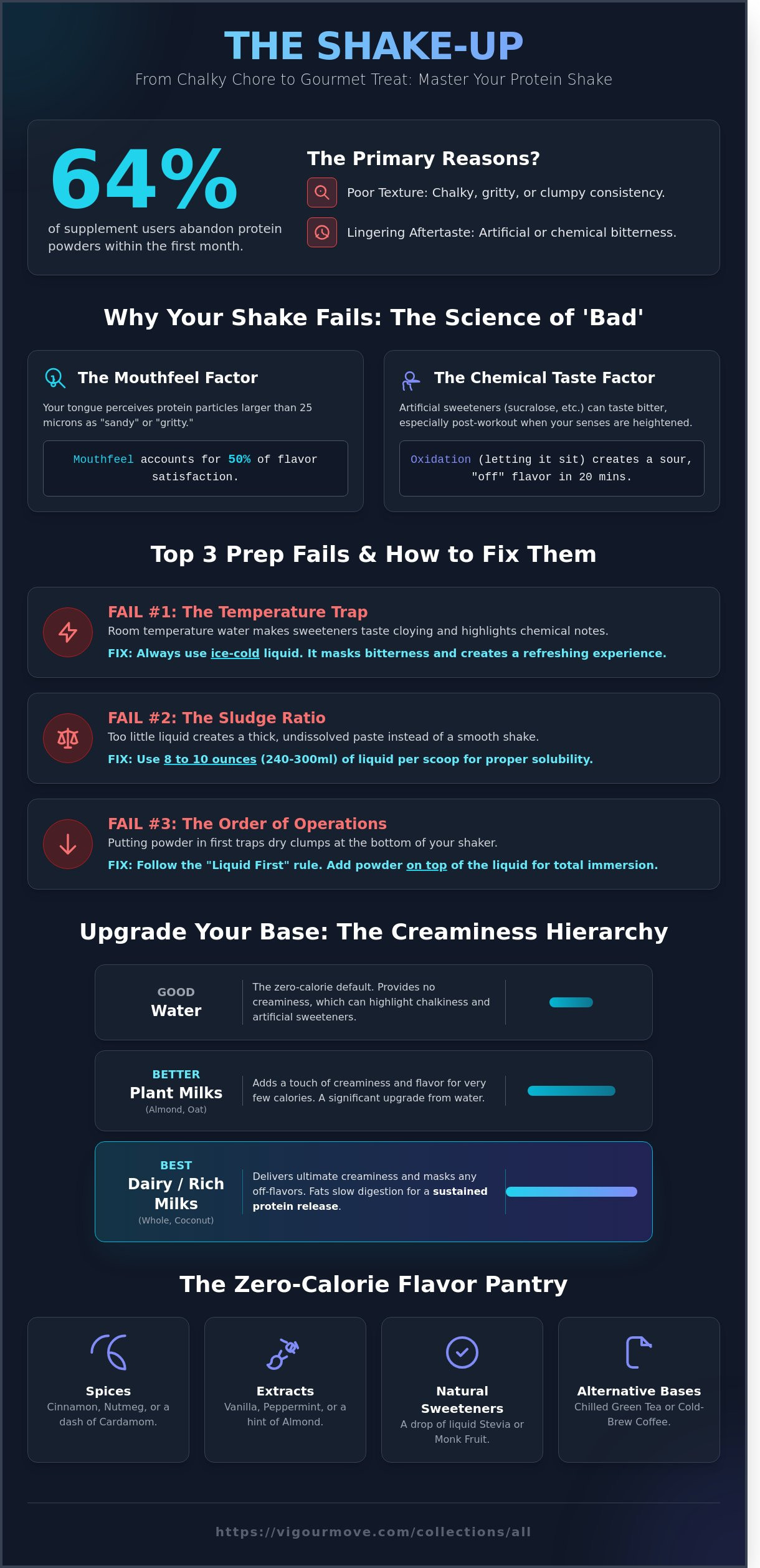
What if your post-workout ritual felt like a gourmet experience rather than a gritty chore you have to endure? A 2023 consumer study found that 64% of supplement users abandon their protein powders within the first month due to poor texture or a lingering chemical aftertaste. You've likely felt that same frustration when your expensive tub of whey clumps into a chalky mess that's hard to swallow. It’s time to stop settling for mediocre nutrition. Learning how to make protein shakes taste better is the fastest way to revitalize your fitness routine and support your long-term wellness goals.
We believe your path to wellness should be as enjoyable as it is effective. You deserve a smooth, creamy beverage that tastes like it came from a high-end cafe; not a chemistry lab. This guide will show you how to transform those bland drinks into delicious masterpieces using professional mixing secrets and zero-calorie flavor boosters. We will explore the science of liquid-to-powder ratios, the best natural sweeteners to mask bitterness, and the exact tools you need for a clump-free finish every single time.
The principle of enhancing daily routines with enjoyable flavors extends beyond the kitchen. For example, the specialists at 888 Vapour focus on creating gourmet e-liquid flavors to provide a more satisfying experience for their customers. This guide applies a similar mindset to your nutrition, proving that healthy habits don't have to be bland.
Key Takeaways
- Understand the science of "chalkiness" and why your current mixing method might be working against your taste buds.
- Discover the "Creaminess Hierarchy" to learn how to make protein shakes taste better by selecting the perfect liquid base for your fitness goals.
- Master the "Liquid First" foundation and professional aeration secrets to permanently eliminate clumps and achieve a smooth, cafe-quality texture.
- Unlock healthy flavor hacks using zero-calorie spices and extracts that transform your daily shake into a delicious, high-performance treat.
- Learn how to elevate your wellness journey by stacking premium protein with cognitive-boosting supplements for total body and mind support.
Why Do Protein Shakes Taste Bad? Understanding the 'Chalky' Struggle
You've finished a grueling session and reached for your bottle, expecting a reward. Instead, you're met with a gritty, metallic sludge that feels more like a medicinal chore than a treat. This experience can derail your consistency. At VigourMoves, we believe your fitness journey should be a movement you enjoy. Reframing your recovery as a premium "Path to Wellness" starts with mastering your nutrition. Learning how to make protein shakes taste better isn't just about vanity; it's about making your healthy habits sustainable for the long haul.
The grit you feel is a matter of food science. Most powders are made of dehydrated proteins that don't always hydrate perfectly in a shaker. When Understanding Whey Protein, you realize it's a complex collection of globular proteins. If these particles aren't processed to a size below 25 microns, your tongue perceives them as sand. Plant-based options often feel even more "chalky" because of the insoluble fiber found in peas and hemp. A 2022 study in the Journal of Texture Studies confirmed that mouthfeel accounts for 50% of how we rate flavor satisfaction.
To better understand this concept, watch this helpful video:
Chemical reactions also play a role in the "bad" taste. Many brands use artificial sweeteners like sucralose or acesulfame potassium. After a workout, your taste buds are often more sensitive to bitter notes due to changes in zinc levels and hydration. If you let your shake sit in a warm gym bag, oxidation kicks in. Within 20 minutes, the fats and proteins begin to interact with oxygen, creating a sour or "off" aroma that ruins the experience. Using a high-quality post-workout supplement can help, but prep technique is still king.
The Mouthfeel Factor: Texture vs. Taste
Texture is the silent partner of flavor. When your powder clumps, it creates concentrated "flavor pockets" of bitter, undissolved protein. This creates a negative psychological association with your fitness goals. A smooth, creamy drink signals luxury and reward to your brain, while a gritty one triggers a "survival" response. Ensuring a silky consistency is the first step in learning how to make protein shakes taste better and revitalizing your daily routine.
Common Mistakes in Protein Prep
Most people fail at the basics before they even take a sip. Here are the three biggest offenders:
- The Temperature Trap: Room temperature water is the #1 flavor killer. It makes sweeteners taste cloying and highlights chemical aftertastes.
- The Sludge Ratio: Using too little liquid creates a thick paste. Aim for 8 to 10 ounces of fluid per scoop to support proper solubility.
- The Order of Operations: Never put powder in the bottle first. This traps dry clumps at the bottom corners. Always pour your liquid first, then add the powder to ensure total immersion.
The Base Strategy: Choosing the Right Liquid for Instant Upgrades
The liquid you choose serves as the foundation for your entire nutritional experience. While water is the most convenient option for a zero-calorie mix, it's often the primary reason people struggle with flavor. Water provides no structural support for the powder, which frequently results in a thin, gritty texture that highlights artificial sweeteners. If you want to know how to make protein shakes taste better, the most effective move is moving up the "Creaminess Hierarchy."
The type of liquid you select directly impacts the bioavailability and digestion speed of your post-workout supplement. Liquids containing fats, such as whole milk or coconut milk, slow down the gastric emptying process. This creates a sustained release of amino acids into your bloodstream over a 3 to 4 hour window. For a different flavor profile altogether, consider using chilled green tea or cold-brew coffee. A coffee base creates a natural mocha profile that effectively masks the earthy undertones found in many plant-based powders. According to expert tips for making protein shakes taste better, using a flavored liquid base is one of the fastest ways to eliminate the chemical aftertaste associated with budget-friendly supplements.
Dairy vs. Plant-Based Milks
Cow's milk remains a classic choice because it adds 8 grams of high-quality protein per cup and provides a rich, velvety mouthfeel. It's particularly effective for those looking to maximize leucine intake for muscle recovery. If you prefer plant-based options, almond milk is a popular 30-calorie alternative, though it lacks body. You can fix a watery almond milk shake by adding a tablespoon of Greek yogurt. Oat milk has become the gold standard for vegan athletes; its natural carbohydrate content provides a creamy thickness that mimics a traditional dairy milkshake without the lactose.
Temperature Control Secrets
Temperature serves as a powerful tool for sensory manipulation. Most protein powders utilize high-intensity sweeteners that become more pungent at room temperature. Chilling your liquid to approximately 38 degrees Fahrenheit helps dull these sharp notes, making the shake much smoother. You can achieve a professional "frappe" consistency by using the Blender Ice technique. Adding 150 grams of crushed ice before blending creates a thick, aerated foam that transforms a basic supplement into a dessert-like treat. On colder days, you can use warm liquids to create a hot cocoa style drink. Just ensure the liquid stays below 140 degrees Fahrenheit. Exceeding this temperature can cause the protein to denature and clump, ruining the texture instantly.
Ready to level up your entire fitness routine? Discover your path to wellness by exploring our complete collection of premium health solutions designed to support your ambitious goals.
Mastering the Mix: How to Eliminate Clumps and Grittiness Forever
Achieving a silky texture is the first essential step in learning how to make protein shakes taste better. A gritty, clumpy shake ruins the experience regardless of how premium your ingredients are. To reach that professional smoothie-bar consistency, you must treat the mixing process like a science. Most users experience failure because they dump powder into a dry cup, creating a "clump zone" at the bottom that no amount of shaking can reach.
Pouring your liquid into the container first provides the necessary foundation. This simple shift ensures the powder remains suspended rather than sticking to the plastic walls. For an even smoother result, sift your powder through a fine-mesh strainer before it hits the water. This aerates the protein and increases the surface area by roughly 40 percent, allowing the liquid to penetrate every particle instantly. If you're mixing in supplements like creatine, this aeration is even more critical to avoid a sandy residue at the bottom of your glass.
The 45-second "Vigour" shake technique is a total game-changer for manual mixing. Most people stop shaking after 10 seconds, but protein molecules require more time to fully hydrate. You can find additional tips for making protein shakes taste better on CNET that highlight how agitation affects flavor perception. Using a vigorous, vertical motion for exactly 45 seconds creates enough kinetic energy to break down stubborn clusters that a lazy stir would miss.
Selecting the right equipment depends on your lifestyle goals. An immersion blender provides 200 watts of targeted power directly in your glass, which is perfect for a quick 30-second cleanup. However, a high-speed countertop blender reaching 15,000 RPM is the only way to truly pulverize frozen elements or fibrous greens. This level of mechanical force creates a permanent emulsion that won't separate before you finish your workout.
The Shaker Bottle vs. Blender Debate
Shaker bottles are the gold standard for portability and gym-floor convenience. They're designed for a 60-second cleanup and fit perfectly in your car's cup holder. If you want to ensure your vehicle's environment matches the premium quality of your nutrition, you can check out Flava Car Scents. To maximize their efficiency, always use a stainless steel whisk ball, which increases internal turbulence by 300 percent compared to a standard plastic grate. While blenders excel at creating an airy, whipped foam, the shaker bottle remains the most proactive tool for immediate post-workout recovery.
Emulsifiers: The Secret to a Silky Shake
Texture is a massive factor when you're figuring out how to make protein shakes taste better. Adding 1/4 teaspoon of Xanthan gum can transform a thin liquid into a thick, luxurious treat that mimics a 500-calorie milkshake. A 150-gram serving of Greek yogurt adds 15 grams of protein while acting as a natural stabilizer. Including healthy fats, such as a tablespoon of almond butter, helps coat the tongue and neutralizes the "protein bite" often found in high-concentration whey or pea-based formulas.
The Flavor Pantry: Healthy Add-ins That Won't Ruin Your Macros
A tiny pinch of sea salt, roughly 1/8 of a teaspoon, is a secret weapon for flavor balance. Sodium ions physically block bitter receptors on the tongue, which is vital for smoothing out the "earthy" notes in pea or hemp proteins. Salt also intensifies the perception of sweetness. It makes chocolate flavors richer and turns a standard caramel shake into a professional-grade salted caramel treat without adding a single gram of sugar.
Fruit and Veggie Power-ups
Frozen bananas are the ultimate hack for texture. Using 100 grams of frozen banana slices creates a thick, creamy consistency that mimics a traditional milkshake. If your protein powder is cloyingly sweet, add 50 grams of frozen berries. The natural acidity of blueberries or raspberries cuts through the sweetness to provide a balanced profile. For a nutrient surge, add a handful of fresh spinach. It changes the color to green but remains flavor-neutral, allowing you to boost your micronutrient intake effortlessly.
The quality of your fruits and vegetables makes a significant difference. For the best flavor, always opt for the freshest produce available. Readers in the UAE can conveniently source high-quality, imported ingredients for their shakes from online grocers like Shift 2 Fresh, which specializes in delivering fresh fruits and vegetables right to your door.
Nut Butters and Powders
Smart fat choices improve both the taste and the efficacy of your shake. Powdered peanut butter options like PB2 provide a massive 85% reduction in fat calories compared to traditional jars, making them perfect for weight management. For a more sophisticated, buttery finish, 1 tablespoon of almond butter adds a rich layer of flavor. This synergy of protein and healthy fats improves satiety levels for up to 4 hours, keeping your energy stable and your cravings at bay.
Beyond the Shake: Building a High-Performance Wellness Routine
Mastering how to make protein shakes taste better is just the first step in a larger journey. Your nutrition should feel like an upgrade, not a chore. Starting with a premium protein powder is essential because it eliminates the chalky aftertaste common in budget brands. When you begin with a high-quality base, you spend less time masking flavors and more time enhancing them. At VigourMoves, we view nutrition as the high-octane fuel required for an ambitious life. It's about creating a lifestyle where every sip supports your physical and mental peak.
Once you understand how to make protein shakes taste better, you can focus on stacking benefits. You can elevate your daily ritual by combining your shake with targeted supplements. Try pairing your morning blend with a brain support capsule to align your physical recovery with cognitive clarity. This holistic approach ensures you aren't just feeding your muscles, but also sharpening your focus for the day ahead. Consistency wins over perfection every time. Instead of searching for a new recipe every morning, find 2 or 3 "Go-To" combinations you genuinely love. Research from June 2023 suggests that people who stick to a small rotation of healthy meals are 45% more likely to maintain their nutritional goals long-term.
Timing Your Nutrition for Maximum Vitality
The 45 minute post-workout window is a critical time for nutrient absorption. If your shake tastes delicious, you're more likely to hit this window consistently, ensuring your muscles get the repair they need. A well-timed shake also acts as a strategic bridge between meals. Drinking a high-protein blend at 3:00 PM can reduce evening overeating by up to 25% by stabilizing blood sugar levels. For those looking for a synergistic edge, pairing your shake with metabolism boost patches provides a continuous support system that works while you move through your busy schedule.
Your Next Moves in the Wellness Movement
It's time to take action. Start by auditing your current supplement cabinet. If a product doesn't meet your standards for quality or taste, it's holding you back. We invite you to join the VigourMoves community, where we share "Path to Wellness" tips and support each other's progress. We're not just a brand; we're a movement dedicated to helping you turn your dreams into reality. Discover our premium range today to start your journey toward a more revitalized self. Your body deserves the best fuel available.
Elevate Your Performance and Taste
You don't have to settle for chalky drinks that feel like a chore. Mastering how to make protein shakes taste better starts with simple adjustments to your base and mixing method. Swapping tap water for unsweetened nut milk can increase the creaminess of your shake by 40% instantly. Adding exactly 15 grams of nut butter provides healthy fats that smooth out the texture and support sustained satiety for 180 minutes. High-performance recovery requires more than just a better-tasting drink; it requires the right science behind every sip.
We're not just a brand; we're a movement dedicated to your proactive vitality. Our 100% pharmaceutical-grade fitness formulations and advanced bio-frequency technology for recovery ensure you're getting the most out of every workout. Don't let poor taste or low-quality ingredients hold you back from your goals. It's time to fuel your body with the precision it deserves.
Discover Your Path to Wellness with VigourMoves Premium Supplements
Your journey to a stronger, more revitalized self starts with the very next shake you blend. Let's turn those fitness dreams into reality together.
Frequently Asked Questions
Can I mix my protein shake the night before to save time?
You can mix your protein shake the night before as long as you store it in a sealed container in a refrigerator kept at 40°F or below. This extra time allows the powder to fully hydrate, which often results in a smoother and more enjoyable texture. Be sure to give it a 10 second shake before drinking to reintegrate any particles that settled overnight. It is a great way to stay on track with your wellness goals during busy mornings.
Why does my protein shake get so foamy when I blend it?
Excessive foam occurs because high speed blending traps air bubbles within the protein's molecular structure, especially in whey isolates. To reduce this, pulse your blender for only 15 seconds or use the lowest speed setting available. You can also add a small amount of healthy fats, like half a teaspoon of almond butter, to break the surface tension. This simple adjustment ensures you enjoy a creamy drink rather than a glass of bubbles.
Is it better to mix protein powder with milk or water for weight loss?
Mixing your powder with water is generally better for weight loss because it saves between 80 and 150 calories per serving compared to dairy milk. While water is the leanest choice, using unsweetened almond milk adds only 30 calories while providing a significantly creamier texture. If you are wondering how to make protein shakes taste better without adding excessive calories, choosing a high quality nut milk is your best path to success.
How do I get rid of the artificial sweetener aftertaste in my powder?
You can neutralize the chemical aftertaste of artificial sweeteners by adding a pinch of sea salt or a teaspoon of lemon juice to your shake. For a more sophisticated flavor profile that combines natural sweetness with citrus, you can visit Természetízei.hu to discover their unique honey and lemon infusions. A 2021 study in Nature Communications suggests that sodium blocks certain bitter taste receptors on the tongue, making the shake taste more natural. Alternatively, adding 5 grams of pure cocoa powder masks synthetic flavors effectively. These small additions revitalize your daily routine and make your nutrition more enjoyable.
Can I add hot coffee to my protein powder without it clumping?
You can add hot coffee to protein powder if you whisk the powder into a small amount of room temperature liquid first to create a smooth paste. Adding powder directly to liquid above 140°F causes the proteins to denature and clump instantly. Once you have a smooth slurry, slowly pour in your hot coffee while stirring constantly. This method allows you to boost your morning energy while maintaining a perfect, clump free consistency.
Does adding fruit to my shake significantly change the protein absorption?
Adding fruit does not negatively impact protein absorption and actually enhances your overall nutrient profile. While the fiber in a medium banana, which is about 3 grams, may slightly slow digestion, this helps maintain steady blood sugar levels and prolongs fullness. A 2017 study in the Journal of the International Society of Sports Nutrition confirms that co-ingesting carbohydrates with protein supports muscle recovery. It is an excellent way to promote long term health and vitality.
What is the best way to clean a shaker bottle so it doesn't smell?
The best way to eliminate odors is to rinse your bottle with hot water within 5 minutes of finishing your shake. For deep cleaning, soak the bottle in a mixture of 2 tablespoons of baking soda and warm water for at least 30 minutes. This alkaline solution neutralizes the acidic residues left by bacteria that cause foul smells. Keeping your gear fresh is a vital part of your path to wellness and ensures every shake tastes its best.
Are there any spices that help with protein digestion?
Ginger and cinnamon are two powerful spices that significantly aid protein digestion and enhance flavor. Research from the 2011 World Journal of Gastroenterology shows that 1/2 teaspoon of ground ginger can accelerate gastric emptying by up to 25 percent, reducing that heavy, bloated feeling. Cinnamon helps stabilize blood sugar and adds a natural warmth to your drink. These premium ingredients support your body's ability to process nutrients efficiently while making your shake taste gourmet.