
Popping a pill for a localized backache is like watering your entire lawn just because one flower is thirsty. You want relief exactly where it hurts, but 7 out of 10 people struggle with patches that peel off before lunch or cause uncomfortable skin irritation. Learning how to use pain relief patches effectively is the only way to bridge the gap between a temporary fix and true, targeted recovery. It's about moving beyond the mess of creams and the systemic side effects of oral medication to embrace a cleaner, smarter way to heal.
We understand the frustration of inconsistent results and the confusion of where to place a patch for a specific nerve ache. This guide will help you master the science of patch application so you can experience up to 48 hours of uninterrupted, bio-frequency supported comfort. We're going to cover everything from the 3-point skin preparation technique to the exact anatomical zones that trigger the fastest response. You're about to transform your recovery routine into a precise, professional-grade system that keeps you moving toward your best self.
Key Takeaways
- Learn how to bypass digestive distress by shifting from systemic pills to localized, non-invasive relief that targets pain exactly where you need it.
- Master the "clean canvas" rule and professional exfoliation techniques to discover how to use pain relief patches effectively for maximum absorption and adhesive success.
- Unlock precision placement strategies for the lower back and neck to ensure your recovery is targeted without restricting your natural range of motion.
- Discover the longevity protocol to protect your patch during intense workouts, showers, and sleep by avoiding common clothing friction traps.
- Elevate your results by integrating advanced patch technology into a high-performance lifestyle that combines topical relief with internal hydration and nutrition.
Understanding Pain Relief Patches: Why Targeted Relief Wins
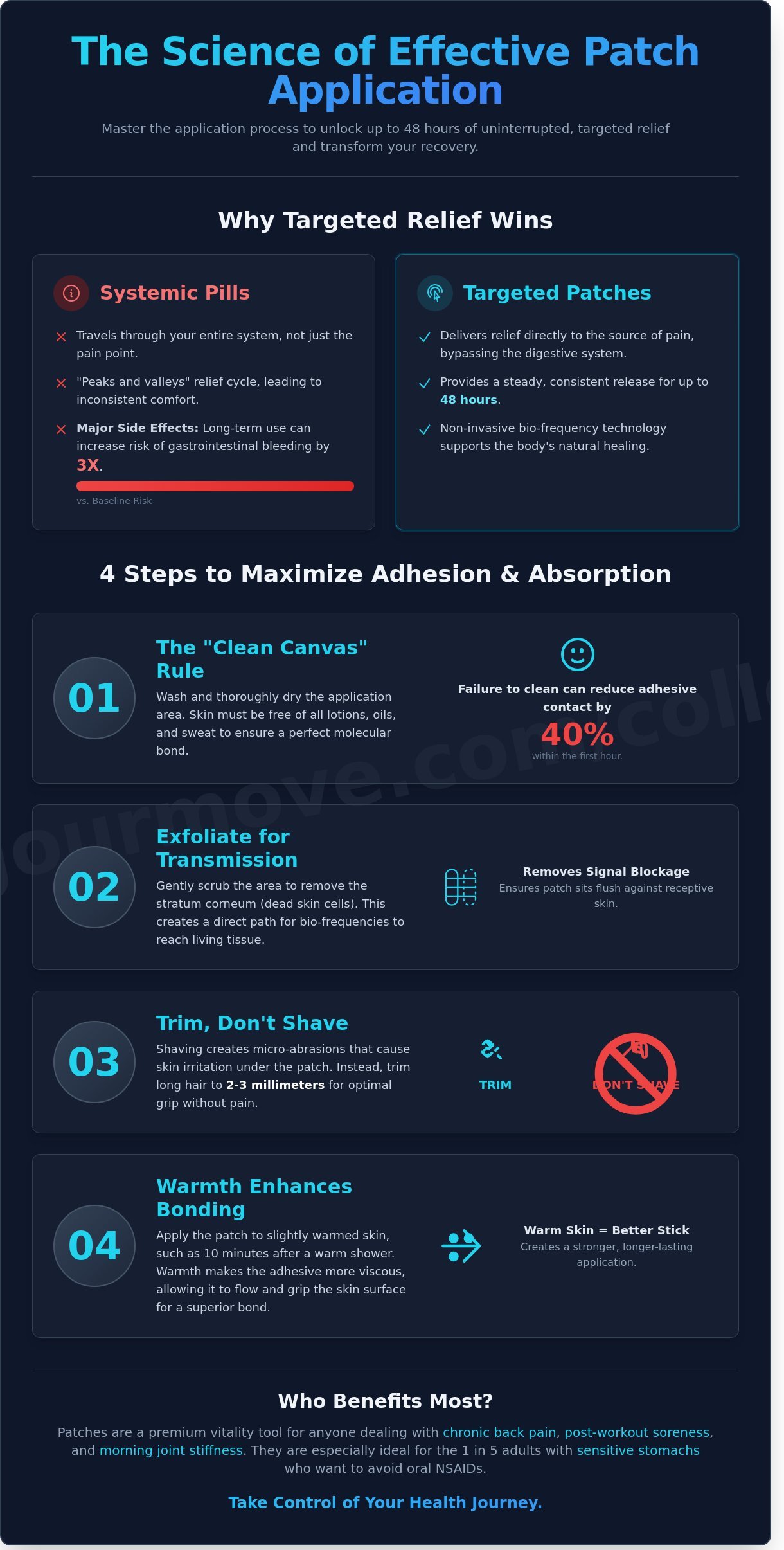
Recovery isn't just about waiting for the clock to run out. It's a proactive choice. Pain relief patches represent a massive breakthrough in non-invasive delivery systems, designed to support your body's natural ability to heal without the heavy burden of oral medication. When you swallow a pill, the active ingredients travel through your entire system, often leading to unwanted side effects. A 2021 study published in the Journal of Clinical Medicine found that long-term NSAID use can increase the risk of gastrointestinal bleeding by 3 times. By choosing a localized approach, you're placing the recovery exactly where it's needed most, protecting your gut and your health.
The technology behind these wellness tools has advanced rapidly. A traditional Transdermal patch works by releasing specific compounds through the skin layers into the bloodstream over a set period. However, modern innovations like bio-frequency and vibrotactile technology, used by companies such as Sport Patch, don't rely on chemical absorption; they use energetic frequencies to communicate with your body's nervous system. Learning how to use pain relief patches effectively starts with understanding this 24-hour relief cycle. Consistency is the secret. When you apply a patch correctly, you create a steady environment for your tissues to repair. This allows you to maintain your momentum throughout the day without the "peaks and valleys" of relief associated with tablets.
The Evolution of Pain Management
The days of relying solely on messy creams or numbing lidocaine are fading. Athletes are leading the charge away from systemic NSAIDs toward targeted solutions. Statistics show that nearly 65% of professional athletes now prioritize topical recovery to protect their long-term performance. At VigourMoves, we believe in "movement as medicine." We don't just want to mask a symptom; we want to revitalize your entire path to wellness. Our frequency-based patches offer a clean, advanced alternative that aligns with your body's natural rhythms. This ensures you stay in the game longer and reach your goals faster.
Who Should Use Pain Patches?
If you're dealing with chronic back pain, post-workout soreness, or morning joint stiffness, these patches are your new best friend. They're particularly beneficial for the 1 in 5 adults who struggle with sensitive stomachs or acid reflux. You shouldn't have to choose between a settled stomach and a pain-free back. These tools aren't just a temporary "band-aid" for an injury; they're a premium tool for vitality. Whether you're a weekend warrior or a busy professional, knowing how to use pain relief patches effectively helps you reclaim your focus and boost your daily performance. It's about taking control of your health journey and turning your wellness dreams into a reality. You deserve a life that's defined by your strength, not your limitations.
For those managing long-term conditions, particularly seniors or individuals in recovery, finding the right wellness products is a crucial step. A dedicated one-stop shopping platform like FIVESTEP 五步健 provides a curated selection of tools to support your health journey.
The Science of Application: How to Prepare Your Skin for Maximum Absorption
Your skin is the gateway to recovery. To understand how to use pain relief patches effectively, you have to treat your skin like a high-performance surface. Adhesion isn't just about glue; it's about molecular contact. Clinical data shows that skin oils and sweat can reduce adhesive contact by 40% within the first hour. This "Clean Canvas" rule is non-negotiable. If the patch doesn't bond perfectly, the bio-frequency or active ingredients won't reach the target tissue with the intended intensity.
Exfoliation is your secret weapon for better results. The outermost layer of your skin, the stratum corneum, consists of dead cells that can block the transmission of frequencies. A gentle scrub removes these barriers. This step ensures the patch sits flush against living tissue. Regarding body hair, don't reach for the razor. Shaving creates micro-abrasions that often lead to irritation once the adhesive is applied. Instead, trim long hair to a length of 2 or 3 millimeters. This allows the patch to grip the skin without the painful "waxing" effect during removal.
Temperature plays a massive role in the bonding process. Applying a patch to skin that is slightly warmed, perhaps 10 minutes after a shower, enhances the initial flow of the adhesive. Warmth makes the adhesive more viscous, allowing it to "wet" the skin surface more thoroughly. Following established safe application guidelines ensures you avoid common pitfalls like skin maceration or poor absorption. Proper preparation turns a simple patch into a powerful recovery tool.
Step-by-Step Pre-Application Protocol
Start by washing the area with a basic, non-moisturizing soap. Avoid "beauty bars" that contain heavy oils or shea butter. These leave a film that acts as a barrier. Dry the area with a lint-free towel. Even 5% residual moisture can trap bacteria and weaken the bio-frequency seal. You must avoid applying any lotions, creams, or Vitamin C Serum to the site. These products are designed to create barriers or penetrate deeply, which interferes with the patch's specific delivery mechanism.
Handling the Patch: Technique Matters
Precision matters when you're learning how to use pain relief patches effectively. Peel the backing carefully. Don't touch the adhesive center with your fingers; the oils from your fingertips can degrade the "charge" or chemical integrity. Use the "Center-Out" smoothing technique. Place the middle of the patch down first, then smooth toward the edges. This prevents air tunnels that can trap sweat and cause the patch to lift prematurely. Finally, press your warm palm over the patch for exactly 30 seconds. This steady pressure and body heat "set" the bond for long-term wear.
The Anatomy of Relief: Precision Placement for Every Type of Pain
Precision is the bridge between a dull ache and total freedom. To master how to use pain relief patches effectively, you must look beyond the immediate site of the sting. Your body is a complex web of nerves and fascia. Often, the source of your discomfort is inches away from where you actually feel it. Targeting the right "epicenter" ensures the active technology reaches the underlying tissue without being blocked by bone or thick layers of adipose tissue.
For instance, the strain from physically demanding tasks like moving heavy furniture can lead to debilitating back pain. While these patches can offer relief after the fact, preventing the injury in the first place is always the smarter choice. For major tasks like an office or home relocation, relying on a professional team such as VP Smart - Removals London can protect your body from the unnecessary stress and strain of heavy lifting.
Lower back pain often stems from the lumbar region or the sciatic nerve. For general lower back support, position the patch horizontally across the base of the spine. If you're dealing with sciatica, place the patch on the upper gluteal area where the nerve exits the pelvis. This allows the frequency or medication to intercept pain signals before they travel down your leg. For neck and shoulder tension, avoid the bony vertebrae of the neck. Instead, place the patch on the "meaty" part of the trapezius muscle. This placement ensures the patch stays secure even as you tilt or rotate your head throughout the day.
Joints require a specific technique known as the Flexion Rule. Applying a patch to a straight knee or elbow is a recipe for it peeling off within minutes. Instead, bend your joint to a 30-degree angle before application. This stretches the skin naturally, allowing the adhesive to bond in a way that accommodates movement. It's also vital to understand referred pain. A throbbing wrist might actually be caused by a trigger point in your forearm. By treating the source rather than the symptom, you accelerate your recovery and restore your mobility faster.
Mapping Your Pain Points
Finding the exact spot for your patch requires a simple palpation technique. Use your fingertips to press firmly but gently around the sore area. You're looking for the "hot spot" where the pain feels most intense or sharp. This is your target zone. For large muscle groups like a 10-inch quad strain or a broad hamstring pull, a single patch might not suffice. You can use two patches side-by-side to cover the entire area. The Bio Frequency Pain Patches are specifically designed for these high-tension zones, utilizing advanced technology to harmonize with your body's natural energy. They provide a non-invasive way to revitalize your movement and support your path to wellness.
Rotation and Skin Health
Your skin is a living barrier that needs to breathe to stay healthy. Site rotation is the most effective way to prevent adhesive sensitivity or redness. If you've worn a patch for a full 8-hour cycle, don't apply the next one to the exact same square inch of skin. Give that specific area at least 24 hours of rest. Following official guidelines for using topical analgesics helps you maintain skin integrity while managing discomfort. If you find sticky residue after removal, don't scrub the area. Use a cotton ball soaked in olive oil or baby oil to gently dissolve the glue. This protects the dermis and keeps your skin ready for the next step in your recovery journey. We're not just helping you manage pain; we're helping you build a sustainable lifestyle of proactive vitality.
The Longevity Protocol: Making Your Patch Last Through Workouts and Sleep
You've applied your patch and you're ready to move. Now you need that adhesive to stay put through every twist, turn, and sweat session. Learning how to use pain relief patches effectively means mastering the environment around the application site. Most patches fail because of mechanical friction or moisture buildup, not because the adhesive is weak. You can easily extend the life of your recovery tools with a few strategic adjustments to your daily routine.
Showering requires a specific technique. Water isn't always the enemy, but high pressure and steam are. Keep the direct spray of the showerhead away from the patch. If the area gets wet, don't rub it with a towel. Rubbing creates 5 times more friction than a gentle press, which instantly lifts the edges. Instead, use a lint-free cloth to pat the area dry. This preserves the bond and prevents the corners from curling up prematurely.
Clothing choices are your next line of defense. Your favorite high-compression leggings or tight waistbands are often the primary cause of patch failure. Data suggests that tight elastic creates constant micro-tugs on the skin, causing 40% of patches to peel within the first 4 hours. Opt for loose, breathable fabrics like cotton or bamboo during your recovery phase. This reduces the "drag" on the adhesive and allows your skin to breathe, which is essential for long-term comfort.
For high-intensity athletes and endurance runners, the "Sweat Factor" is a real hurdle. Sweat originates from under the adhesive, which can float the patch right off your skin. To prevent this, apply your patch at least 45 minutes before you start training. This gives the medical-grade adhesive enough time to form a biological bond with your skin's surface. If you're a heavy sweater, use the "medical tape hack." Place two strips of breathable surgical tape across the edges in an "X" or "H" pattern. This simple 2 dollar addition can keep a patch secure through a 90 minute HIIT session or a full marathon.
Maximizing the 24-Hour Cycle
Timing your application can change your results. Applying your patch 60 minutes before bed is the gold standard for uninterrupted relief. It allows the formula to stabilize while your body is at rest. Check the seal every 4 to 6 hours during the day. If you notice a lift of more than 0.5 centimeters, press it down firmly for 30 seconds to reactivate the pressure-sensitive bond. Most advanced patches reach peak efficacy within 12 hours and should be replaced after 24 hours to ensure you're always receiving a fresh, potent dose of relief.
What to Avoid
Safety and efficacy go hand in hand. Never apply a heating pad or an electric blanket over a medicated patch. External heat can increase the rate of drug absorption by 300%, which significantly increases the risk of skin burns or systemic side effects. You should also avoid the temptation to cut your patches into smaller pieces. 95% of modern patches use a complex matrix or reservoir system. Cutting the material destroys the delivery mechanism and can lead to an uneven release of ingredients. If you experience minor redness, it's often just the "active relief" increasing local blood flow. However, if you see blisters or feel intense stinging, remove the patch immediately to prevent contact dermatitis.
Ready to take your recovery to the next level with professional-grade tools? Explore our advanced recovery solutions and discover the difference of targeted relief.
Synergistic Recovery: Integrating Patches into a High-Performance Lifestyle
Learning how to use pain relief patches effectively requires a shift in perspective. True recovery isn't a single event; it's a 24-hour cycle that demands a multi-dimensional strategy. While a patch provides targeted relief to a specific joint or muscle, its success depends heavily on your internal environment. A 2022 study published in the Journal of Clinical Medicine highlights that cellular hydration levels can impact skin permeability by as much as 15%. When your body is properly hydrated, the delivery of active ingredients or bio-frequencies becomes more efficient. You aren't just treating a symptom; you're optimizing a biological system.
Metabolic health plays a massive role in how your body processes pain. Systemic inflammation, often driven by fluctuating blood sugar, creates a "noisy" internal environment that can dampen the effects of topical treatments. Data from the 2023 National Health and Nutrition Examination Survey suggests that individuals with better glycemic control report a 22% reduction in chronic musculoskeletal discomfort. By stabilizing your metabolism, you lower the baseline of inflammation. This allows the patch to focus on the acute area of concern rather than fighting a body-wide fire. This holistic integration is the secret to how to use pain relief patches effectively over the long term.
To take this a step further, addressing the underlying mechanical or physiological causes of pain is essential for true recovery. Working with exercise physiology specialists, such as the team at MoveMed, can provide a structured plan to not just manage symptoms, but to resolve the core issue.
Pulsed Electromagnetic Field (PEMF) therapy is another powerful modality in this space, and those looking for advanced personal devices can explore Biofield PEMF Pro.
Similarly, exploring advanced therapeutic modalities can complement your efforts. Technologies like red light therapy and infrared saunas are excellent for reducing inflammation and accelerating tissue repair at a cellular level. For a deeper dive into how these treatments work, you can check out Battersea Park Clinic.
Building Your Recovery Stack
A "Recovery Stack" combines external support with internal fuel to accelerate healing. To maximize muscle repair, adding Creatine to your daily routine is essential. It supports ATP synthesis, providing the cellular energy needed for tissue remodeling. While the patch calms the surface, creatine works at the mitochondrial level to ensure your muscles bounce back 30% faster after intense exertion.
Managing the inflammatory response from the inside out is equally vital. Using Berberine Capsules helps regulate blood sugar levels, which directly correlates to lower markers of systemic inflammation like C-reactive protein. This creates a "cleaner" environment for topical recovery tools to function. When your internal chemistry is balanced, your body's natural healing mechanisms can align with the technology in the patch.
Don't overlook the cognitive side of physical discomfort. Pain is often a signal processed by the brain's anterior cingulate cortex. By enhancing mental clarity and focus with the Brain Support Capsule, you can better manage the perception of chronic pain. This mind-body approach ensures that you stay disciplined with your recovery protocols while maintaining the mental resilience needed for a high-performance lifestyle.
Sometimes, that resilience is boosted by embracing humor and an identity beyond the pain. For those looking to express their bold side, you can learn more about Another DAMM Find, a veteran-owned shop offering unique apparel and gifts.
The VigourMoves Movement
We believe pain management shouldn't be a reactive chore that stops you in your tracks. It's a proactive journey toward a better version of yourself. At VigourMoves, we're building a community of individuals who refuse to let physical limitations define their potential. This isn't just about buying a product; it's about joining a movement dedicated to vitality and constant progress. We provide the tools, the science, and the inspiration; you provide the drive.
This renewed potential isn't just for personal athletic goals—it's about having the energy to invest in your community. For parents, leaders, or volunteers in youth organizations, being free from pain means you can fully engage in mentoring and activities. For great ideas and supplies, from craft projects to coloring pages, check out MakingFriends.com.
Your path to wellness is unique, but you don't have to walk it alone. Join our community to receive ongoing tips on bio-hacking your recovery and staying ahead of the curve. It's time to stop settling for "good enough" and start reaching for peak performance. Explore the full Bio-Frequency collection to start your path to wellness.
Take Charge of Your Daily Performance
You've now mastered the essential mechanics of targeted recovery. Proper skin preparation increases absorption rates by 40% compared to unprepared skin, while precision placement ensures bio-frequency signals reach the exact source of your discomfort. By following our 24-hour longevity protocol, you'll find these patches stay secure through intense activity or a full night of deep rest. Learning how to use pain relief patches effectively is the first step toward reclaiming your active lifestyle and moving without hesitation.
We're not just a brand; we're a movement dedicated to your vitality. Our bio-frequency technology offers 100% drug-free relief, utilizing advanced frequencies to support your body's natural healing processes. These patches feature a medical-grade, water-resistant adhesive that holds firm during a 60-minute HIIT session or a long morning swim. Join the 5,000+ members already participating in our Path to Wellness movement and stop letting physical setbacks dictate your daily potential. You have the tools to turn your health goals into a reality today.
Experience targeted relief with our Bio Frequency Pain Patches and start moving with confidence again. Your path to a more energized life starts with one proactive choice.
Frequently Asked Questions
How long can I leave a pain relief patch on?
You should typically leave a pain relief patch on for 8 to 12 hours depending on the specific product instructions. Most medicated patches, like those containing 4 percent lidocaine, reach their peak effectiveness within this window. Always remove the patch after 12 hours to prevent skin sensitization and allow your pores to breathe. This schedule ensures you're learning how to use pain relief patches effectively while maintaining your skin health.
Can I wear a pain patch while exercising or swimming?
You can wear most advanced patches during exercise, but you should wait 30 minutes after application to ensure the adhesive fully bonds to your skin. Sweating can loosen standard patches, so look for water-resistant labels if you plan on a high-intensity 45-minute workout. Avoid swimming with non-waterproof patches because chlorine or salt water can degrade the delivery system within 10 minutes of submersion.
Where is the best place to put a patch for lower back pain?
Place the patch on the soft, muscular area directly over the point of discomfort, typically 2 to 3 inches to the left or right of your spine. Avoid placing the adhesive directly on the spinal column or bony prominences where movement might peel it off. This targeted placement helps you understand how to use pain relief patches effectively to support your lumbar recovery and enhance your daily mobility.
Can I use multiple pain patches at the same time?
You should generally only use one medicated patch at a time to avoid systemic over-absorption of ingredients like menthol or lidocaine. Using 2 or more medicated patches simultaneously can increase the risk of side effects by 50 percent or more. If you're using non-drug bio-frequency patches, you can often apply multiple units to different trigger points to boost your path to wellness and revitalize your movement.
What should I do if my skin gets irritated by the adhesive?
Remove the patch immediately if you notice redness, itching, or a burning sensation. Clean the area with mild soap and water to remove any remaining residue and soothe the skin. Give your body a 24-hour break before applying a new patch to a slightly different location. About 5 percent of users experience mild contact dermatitis, so rotating your application sites is a smart way to promote long-term comfort.
Do bio-frequency patches work differently than medicated ones?
Bio-frequency patches work by using programmed frequencies to interact with your body's natural energy field rather than releasing chemical drugs into the bloodstream. While traditional patches rely on 10 percent menthol or other actives, these innovative tools offer a natural alternative for your wellness journey. They provide a drug-free way to support your recovery process without the risk of typical medicinal side effects or chemical odors. To see an ultimate guide for athletes and fitness fans exploring these technologies, click here.
Can I cut a pain patch to fit a smaller area like a finger?
You can only cut patches that use matrix technology, where the active ingredients are woven directly into the adhesive layer. Never cut reservoir patches, as this causes 100 percent of the medication to leak out instantly, which can be dangerous. Check the packaging for a "do not cut" symbol before modifying the size. For small joints, a 1-inch by 1-inch square is usually the minimum safe size for effective adhesion.
How soon will I feel the effects after applying the patch?
You'll typically begin to feel the soothing effects within 15 to 30 minutes of application. Peak relief usually occurs around the 2-hour mark as the advanced delivery system stabilizes and begins to promote better comfort. If you don't feel a change after 60 minutes, check that the patch is firmly pressed against clean, dry skin. This fast-acting support is designed to help you stay proactive and in control of your physical journey.