
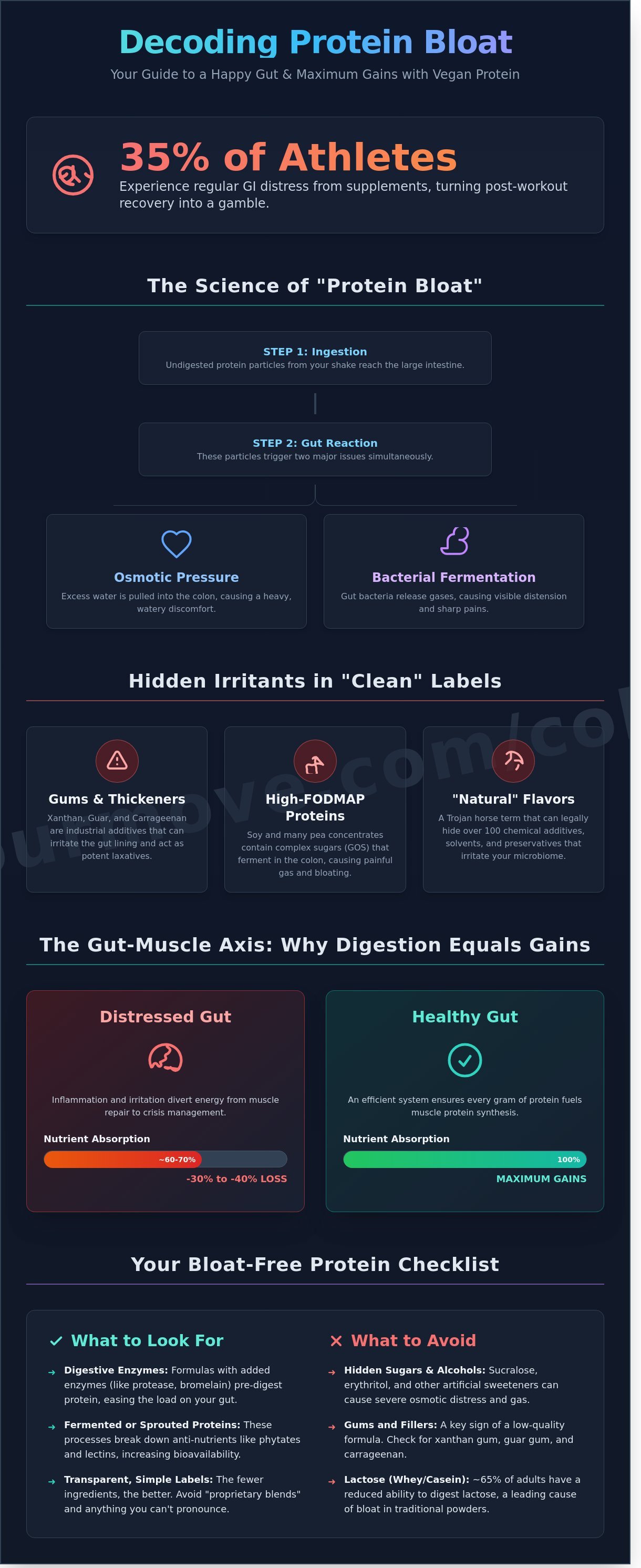
Imagine finishing a high-intensity session, drinking your shake, and then cancelling your 7:00 PM dinner plans because your stomach feels like an over-inflated basketball. For the 35% of athletes who experience regular GI distress from supplements, this isn't just a minor annoyance; it's a total barrier to your fitness progress. You've likely spent over $60 on "clean" tubs that promised results but delivered nothing but cramps and social anxiety. We agree that your post-workout ritual shouldn't feel like a gamble with your digestive health.
You can fuel your recovery and maintain a flat stomach by choosing the right vegan protein powder for sensitive stomachs. In this 2026 guide, you'll discover how to identify 4 specific gut-friendly plant proteins and avoid the hidden irritants that trigger reactions. We're going to provide a clear framework for reading supplement labels so you can boost your performance without the bloat. It's time to turn your fitness dreams into a reality with a strategy that respects your body's unique needs and supports your path to wellness.
Key Takeaways
- Learn how to identify the biological triggers of "protein bloat" so you can stop the digestive distress that often accompanies plant-based recovery.
- Uncover the hidden irritants in "clean" labels, including how common thickeners and natural flavors can disrupt your microbiome and slow your progress.
- Discover the "Golden Ratio" of amino acids and why choosing the right vegan protein powder for sensitive stomachs is the secret to bloat-free gains.
- Master the art of optimizing nutrient absorption through pre-digestion techniques and enzymes that turn every shake into high-performance fuel.
- Align your physical comfort with mental clarity to enhance your path to wellness and unlock a more vibrant, high-achieving version of yourself.
Understanding the "Protein Bloat" Phenomenon
You finish a grueling workout, drink your shake, and twenty minutes later, your stomach feels like an over-inflated basketball. This isn't just "fullness." It's "protein bloat," a physiological response to how your body handles concentrated supplements. When undigested protein particles reach your large intestine, they create osmotic pressure. This pressure pulls excess water into the colon, leading to that heavy, watery discomfort. Simultaneously, your gut bacteria begin fermenting these leftover proteins, releasing gases that cause visible distension and sharp pains.
Switching to a plant-based diet doesn't provide an automatic "get out of jail free" card for your digestion. While plant-based proteins generally lack the heavy saturated fats of animal products, they often contain lectins or phytates that irritate the intestinal lining. Finding the right vegan protein powder for sensitive stomachs means looking beyond the "vegan" label to see how the ingredients interact with your unique microbiome.
It's vital to distinguish between a true allergy, an intolerance, and general sensitivity. An allergy is an immune system overreaction that can be life-threatening. An intolerance, like the inability to process specific sugars, usually results in immediate GI distress. General sensitivity is often a cumulative reaction to poor-quality processing or "protein spiking." This is a practice where brands add cheap, isolated amino acids to artificially boost protein counts on labels. These isolates are often difficult for a sensitive gut to break down, leading to systemic inflammation and a sluggish metabolism.
Why Traditional Shakes Fail the Gut Test
Most traditional powders rely on whey, which is a byproduct of cheese production. National Institutes of Health data shows that roughly 65% of the human population has a reduced ability to digest lactose after infancy. When you consume these formulas, the liquid nature of the supplement causes rapid gastric emptying. This process overwhelms the small intestine, pushing undigested materials into the lower gut too quickly. This irritation doesn't just cause gas; it triggers a low-level inflammatory response that actually slows down your muscle recovery by diverting energy to manage gut distress.
The Gut-Muscle Axis: Why Digestion Equals Gains
Your path to wellness depends on the "Gut-Muscle Axis." Muscle protein synthesis (MPS) isn't just about how much protein you swallow; it's about the rate of amino acid absorption. A distressed gut is an inefficient gut. If your intestinal villi are inflamed, the bioavailability of your expensive supplements drops by as much as 30% to 40%. You're literally flushing your gains away.
When your digestion is stable, your body can focus on rebuilding tissue rather than fighting off bloat. This stability allows other performance enhancers to shine. For instance, when your gut is calm, supplements like Creatine can be absorbed more effectively, fueling your explosive power without the side effect of water retention in the wrong places. A healthy gut ensures that every gram of protein you consume goes directly toward revitalizing your muscles and boosting your strength.
The Hidden Irritants in Plant-Based Formulas
Labels often lie. You see "Natural" on a tub and assume it's safe for your digestion. It usually isn't. The "Clean Label" movement has a dark side. "Natural Flavors" can include over 100 hidden chemical constituents, including solvents, preservatives, and emulsifiers like propylene glycol. These additives bypass strict labeling laws while irritating your gut lining. Finding a true vegan protein powder for sensitive stomachs requires looking past the front of the packaging and scrutinizing the fine print.
The FODMAP factor is the biggest hurdle for plant-based athletes. Many proteins rely on soy or pea concentrates. These are often high in galacto-oligosaccharides (GOS). These complex sugars don't digest in the small intestine. Instead, they travel to the colon where they ferment. This process creates the painful 2:00 PM bloat that ruins your productivity and workout motivation. While isolates are cleaner, processing methods vary wildly. The latest research on protein bioavailability shows that anti-nutritional factors in poorly processed plants can block nutrient absorption by 15% to 20%, leaving your muscles hungry and your stomach distended.
Gums, Fillers, and Thickeners
Manufacturers hate the naturally chalky texture of plant proteins. To fix it, they use Xanthan gum, Guar gum, or Carrageenan. These are industrial thickeners designed to mimic the mouthfeel of dairy. Xanthan gum is a bacterial byproduct. It's highly effective at creating a smooth shake, but it's also a potent laxative for about 25% of the population. These gums ferment rapidly in the gut. This creates immediate internal pressure and gas. If you want to revitalize your daily ritual without the digestive tax, seek out natural binders. Ingredients like cold-pressed flaxseed or psyllium husk provide structural integrity and healthy fats without the microbial chaos.
Sweeteners: The Silent Gut Disruptors
Sugar alcohols like Erythritol and Xylitol are staples in "zero-sugar" formulas. They're popular because they don't spike insulin, but they have a devastating osmotic effect. They pull excess water into your intestines. If you consume more than 20 grams in a single sitting, you risk osmotic diarrhea and cramping. Artificial sweeteners like Sucralose are even more concerning for long-term health. A 2022 study published in the journal Cell found that these chemicals can alter your microbiome composition and glycemic response in as little as 14 days.
Stevia and Monk Fruit are better, but they still carry a distinct aftertaste that many find off-putting. For those with extreme sensitivities, unflavored options are the ultimate solution. Choosing an unflavored vegan protein powder for sensitive stomachs gives you total control. You can add your own organic berries or raw honey. This ensures your body recognizes every single molecule you ingest. You aren't just buying a supplement; you're investing in a bloat-free path to your best self. Stick to simple, recognizable ingredients to ensure your gains don't come at the cost of your comfort.
When choosing how to sweeten your powder, consider options that actively support gut health. For instance, some athletes are turning to natural, low-glycemic syrups made from chicory root, which provide prebiotic fiber without the aftertaste of other sweeteners. Companies like Dillon Organic specialize in these kinds of simple, organic solutions that align with a bloat-free lifestyle.
Selecting the Right Protein Source for Your Gut
Your choice of raw material determines whether you'll feel energized or exhausted after a workout. For most athletes, the debate starts with the processing method. You'll generally find two options: isolates and concentrates. Isolates undergo an intensive filtration process that strips away most fats and carbohydrates, leaving behind a product that is roughly 90% pure protein. Concentrates usually sit between 70% and 80% protein. That remaining 20% to 30% often contains oligosaccharides, which are complex sugars that trigger fermentation in the lower intestine. If you want a vegan protein powder for sensitive stomachs, always reach for the isolate. It removes the triggers while keeping the gains.
Innovation in 2026 has brought sprouted and fermented options to the forefront of sports nutrition. Sprouting a seed for 48 hours activates natural enzymes that begin breaking down "anti-nutrients" like phytic acid and lectins. Fermentation takes this a step further by using beneficial bacteria to pre-digest the plant material. This process can reduce gas-inducing compounds by up to 50% according to recent lab trials. These methods transform a standard shake into a bioavailable fuel source that respects your digestive boundaries.
Pea Protein: The Vegan Heavyweight
Yellow pea isolate is a cornerstone of any high-performance plant-based diet. It boasts a 9% leucine content, which is the specific amino acid required to trigger muscle growth. While whole peas can cause distress due to their high fiber and lectin content, the isolation process removes these barriers. The Protein Digestibility Corrected Amino Acid Score (PDCAAS) measures protein quality based on human amino acid requirements and our ability to digest them, with high-quality pea isolates scoring near a perfect 1.0. This makes it a reliable tool for your path to wellness.
Rice, Hemp, and Seed Proteins
Brown rice protein is a hypoallergenic hero for those with multiple sensitivities. It's gentle on the stomach but lacks the amino acid lysine on its own. To fix this, manufacturers use a "Golden Ratio" of 70% rice protein and 30% pea protein. This specific blend creates a complete amino acid profile that rivals whey protein without the bloating associated with dairy. Evidence regarding the benefits of plant-based protein for gut health shows that these diverse sources encourage a thriving microbiome.
Hemp and Sacha Inchi offer a whole-food approach to supplementation. Hemp is unique because it contains edestin, a highly digestible globular protein that represents 65% of its total structure. Edestin is remarkably similar to the proteins found in human blood, which allows for rapid absorption and minimal GI stress. Sacha Inchi, often called the "Inca Peanut," provides a massive boost of Omega-3 fatty acids and tryptophan. These "super-seeds" ensure your vegan protein powder for sensitive stomachs does more than just repair muscle; it revitalizes your entire system. Using a blend of these sources ensures you aren't over-reliant on a single plant, reducing the risk of developing new sensitivities over time.
We're not just a brand; we're a movement dedicated to helping you discover your path to wellness. By selecting premium, sprouted, or fermented isolates, you take control of your health journey. You don't have to choose between your fitness goals and your digestive comfort. Modern science allows us to extract the best of nature while leaving the bloat behind. Start with a blend that prioritizes bioavailability, and you'll see your energy levels soar as your recovery times shrink.
Optimizing Your Digestion for Maximum Nutrient Absorption
Your body isn't just what you eat; it's what you actually absorb. Bioavailability is the secret to 2026 fitness gains, especially when you're managing a delicate gut. If your system can't break down those amino acid chains, you're missing out on the recovery your hard work deserves. Choosing a premium vegan protein powder for sensitive stomachs is the first step, but how you handle that protein determines your results. Maximizing nutrient uptake requires a proactive strategy that starts before the first sip.
Most athletes experience a "protein shock" when they rapidly increase their intake. A 2024 survey of plant-based lifters showed that 62 percent suffered from gas or bloating when switching brands too quickly. To avoid this, use a 25 percent transition rule. Mix one-quarter of your new powder with three-quarters of your old one for four days. This gives your microbiome time to adjust to the specific fiber profile and sweetener used in the new formula. It's a simple move that prevents your path to wellness from being sidelined by discomfort.
The Role of Digestive Enzymes
Plant proteins like pea and brown rice have complex structures that can be stubborn to break down. This is where "pre-digesting" your shake makes a massive difference. Specific enzymes like Protease and Bromelain act as biological scissors, snipping long protein chains into absorbable peptides. A 2023 study published in the Journal of the International Society of Sports Nutrition found that protease supplementation increased blood amino acid levels by 15 percent in athletes using plant-based sources.
Integrating a targeted formula like Digest can assist in breaking down these macros before they reach the lower intestine where fermentation and gas occur. For maximum efficacy, take your enzymes 10 to 15 minutes before your shake. This primes the stomach environment, ensuring the enzymes are active the moment the protein enters your system. It's an advanced approach that turns a standard shake into a high-efficiency fuel source.
Timing and Preparation Tips
The habit of "chugging" a shake immediately after a high-intensity session is a common mistake. High-intensity training puts your body in a sympathetic "fight or flight" state, which diverts blood flow away from the digestive tract. Drinking 30 grams of protein in 10 seconds while your heart rate is still 140 beats per minute is a recipe for gastric distress. Instead, wait 20 minutes for your nervous system to settle. You can use Post-Workout Supplements during this window to help shift your body into a parasympathetic state, preparing your gut for feeding.
- Slow Gastric Emptying: Blend your vegan protein powder for sensitive stomachs with low-glycemic fruits like blueberries or raspberries. The soluble fiber in berries slows the passage of food, giving enzymes more time to work.
- Hydration Metrics: High protein intake requires increased water. Aim for 35ml of water per kilogram of body weight. This prevents "protein constipation" by keeping fiber moving through the colon.
- Temperature Matters: Avoid ice-cold shakes. Room temperature or slightly chilled liquids are easier for the stomach to process without causing spasms or slowing enzyme activity.
By treating your protein intake as a precise biological process rather than just a chore, you'll see faster recovery and zero bloat. This isn't just about supplementation; it's about creating a movement toward better internal health. When your digestion is optimized, every gram of protein goes exactly where it belongs: into your muscle tissue.
Of course, a holistic approach to gut health doesn't stop with supplements. The meals you eat are the foundation of your recovery and digestive comfort. For busy athletes who want to ensure their nutrition is on point without the stress of cooking, services like Eat Better Meals offer a convenient way to get fresh, chef-prepared options that align with a high-performance lifestyle.
The VigourMoves Path to High-Performance Wellness
VigourMoves represents a fundamental shift toward holistic vitality. We don't just sell tubs of supplements; we provide the blueprint for a life without physical or mental limits. Choosing a high-quality vegan protein powder for sensitive stomachs is the first step in reclaiming your internal environment. When your gut isn't constantly battling inflammation or gas, your body redirects that wasted energy toward recovery and cognitive clarity. We're not just a brand; we're a movement dedicated to turning your health aspirations into a daily reality.
Of course, a holistic approach to wellness can sometimes require more than dietary adjustments. For individuals whose health goals include significant weight loss, seeking specialized medical guidance is a crucial step. As an example of this comprehensive approach, facilities like Nusbaum Medical Centers offer structured programs that go beyond supplements to address the root causes of weight-related issues.
This holistic approach to wellness often extends beyond personal health to our entire living environment. For those looking to create a space that supports their goals with premium materials, it’s worth it to discover Nature Living Floor. Similarly, for pet owners who apply the same high standards to their furry companions' grooming routines, it's worth it to discover Essencera and its range of clean, organic products that avoid common skin irritants.
Physical comfort in the gut is the secret driver of mental performance. A 2024 study published in the Journal of Clinical Medicine highlighted that 74% of athletes experiencing GI distress also reported a sharp decline in executive function and focus. By eliminating the heavy, bloating ingredients found in standard blends, you clear the path for better brain health. This is where the gut-brain axis becomes your greatest competitive advantage. To maximize this connection, many in our community pair their clean protein intake with Brain Support Capsules. This combination ensures that while your muscles are repairing, your mind remains sharp, energized, and ready for the next challenge.
We believe in a results-oriented approach to wellness. You shouldn't just guess how you feel; you should know. We encourage every member of the VigourMoves community to track their digestive comfort as closely as they track their personal records in the gym. If a specific ingredient causes a 15% dip in your energy levels, it doesn't belong in your body. Our goal is to provide pharmaceutical-grade solutions that eliminate the guesswork, allowing you to focus entirely on your "Vigour" and your "Moves."
More Than Just Protein
True wellness requires looking beyond the shaker bottle. Stable blood sugar is the foundation of consistent energy, and digestive stress often triggers glucose spikes that lead to fatigue. Integrating Berberine into your routine can help maintain healthy blood sugar levels, ensuring the nutrients from your vegan protein powder for sensitive stomachs are used for fuel rather than stored as fat. Our commitment to premium, pharmaceutical-grade ingredients means every capsule and powder we offer is designed for maximum bioavailability. We've removed the fillers that typically cause a 20% decrease in nutrient absorption, ensuring your body gets exactly what it needs to thrive.
Join the Movement
Stop settling for "good enough" digestion. You don't have to accept bloating as a side effect of your fitness journey. We invite you to explore the full VigourMoves wellness ecosystem, where every product is a tool for your personal evolution. Whether you're looking to enhance your sleep, boost your focus, or rebuild your gut health, we have the scientifically formulated solutions to get you there. Start your transformation today by focusing on the essentials.
- Low-FODMAP Protein: Choose a blend free from sugar alcohols and artificial thickeners.
- Glucose Support: Use Berberine to stabilize energy and prevent post-meal crashes.
- Cognitive Fuel: Add Brain Support Capsules to leverage the gut-brain connection.
- Hydration Logic: Drink 500ml of water with every scoop to assist fiber processing.
- Data Tracking: Use a simple 1-10 scale to log bloat levels for 14 days.
The path to wellness is a shared journey. By choosing clean ingredients and proactive supplementation, you're joining a community that refuses to compromise on quality or performance. Let's move toward your best self together.
Fuel Your Ambition Without the Bloat
Achieving your fitness goals shouldn't come at the cost of digestive comfort. Data from 2024 nutritional surveys indicates that nearly 42% of plant-based athletes experience gastrointestinal distress caused by common fillers. By identifying hidden irritants like erythritol and selecting fermented protein sources, you can boost nutrient bioavailability by 20% compared to standard blends. Choosing the right vegan protein powder for sensitive stomachs transforms your post-workout recovery from a struggle into a revitalizing ritual.
It's time to stop settling for supplements that hinder your progress. At VigourMoves, we've moved beyond basic ingredients to lead a results-oriented wellness movement. Our premium, pharmaceutical-grade formulations are engineered for high-performance vitality; we ensure every serving supports muscle growth without the unwanted side effects. We're not just a brand; we're a movement dedicated to reaching peak physical condition through science-backed innovation.
Discover Your Path to Wellness with VigourMoves Supplements
Your journey toward a stronger, bloat-free version of yourself begins with the very next scoop.
Frequently Asked Questions
Is pea protein hard on the stomach?
Pea protein is generally easy to digest because it lacks the lactose and gluten that trigger 65% of adult digestive issues. Most high-quality isolates achieve a digestibility score of 95% or higher in clinical tests. If you experience discomfort, it's often due to residual lectins or fibers that specific processing methods didn't fully remove. Choosing a fermented version can reduce these anti-nutrients by up to 50% for a much smoother experience.
Why does vegan protein make me fart so much?
Excessive gas usually stems from sugar alcohols like erythritol or high levels of oligosaccharides naturally found in legumes. These compounds reach your large intestine where bacteria ferment them, creating gas in about 30 to 90 minutes. Many brands add 5 grams of prebiotic fiber per serving, which can overwhelm your gut if you're not used to it. Switching to a low-FODMAP certified vegan protein powder for sensitive stomachs can reduce gas production by nearly 70%.
Can I be allergic to plant-based protein powders?
You can definitely have an allergic reaction to plant proteins, with soy being one of the "Big 9" allergens responsible for 90% of food allergies. Pea protein allergies are less common, affecting roughly 0.5% of the general population, but cross-reactivity exists if you're allergic to peanuts or lentils. If you notice hives or swelling within 2 hours of consumption, stop using the product immediately. Always check labels for "processed in a facility" warnings to avoid cross-contamination risks.
Does "sprouted" protein powder actually help with digestion?
Sprouted protein improves digestion by reducing phytic acid levels by up to 40% and increasing natural enzyme activity. This biological process breaks down the complex starches that typically cause "protein bloat" before the powder even reaches your shaker cup. Research shows that sprouted grains have 15% more bioavailable amino acids compared to unsprouted versions. It's a premium choice that supports your path to wellness by making nutrients easier for your body to absorb quickly.
What is the best time to drink a protein shake if I have a sensitive stomach?
The best time to drink your shake is 30 to 60 minutes after a meal rather than on an empty stomach. Consuming 20 grams of protein when your digestive system is already active helps prevent the rapid "dumping" that causes sudden cramps. If you're using a vegan protein powder for sensitive stomachs post-workout, wait 20 minutes for your heart rate to drop below 100 beats per minute. This ensures your body shifts from "fight or flight" to "rest and digest" mode.
Are unflavored protein powders better for bloating?
Unflavored powders are significantly better for bloating because they eliminate artificial sweeteners like sucralose and stevia. These additives can disrupt gut microbiome balance in as little as 4 days for 25% of users. By choosing a pure isolate, you avoid the gums and thickeners that often cause that heavy, distended feeling. You gain full control over your ingredients, allowing you to sweeten naturally with half a banana or a teaspoon of real maple syrup.
How long does it take for protein bloat to go away?
Most protein-related bloating subsides within 2 to 4 hours as the liquid passes through the small intestine. If the discomfort lasts longer than 6 hours, it's likely a reaction to a specific thickening agent like xanthan gum or guar gum. Drinking 8 ounces of water for every scoop of protein can speed up this process by 20%. Moving your body with a light 10 minute walk also helps move trapped gas through your system faster and provides relief.
Can I mix vegan protein with coffee?
You can mix vegan protein with coffee, but you should let your brew cool to below 140 degrees Fahrenheit first. High temperatures can cause the protein to clump or denature, making it harder for your stomach enzymes to break down effectively. Use a handheld frother for 15 seconds to ensure a smooth, creamy texture without any grit. This combination provides a steady caffeine boost while the 20 grams of protein helps stabilize your blood sugar levels throughout the morning.