
Staring at a wall of protein tubs, wondering which one will actually help you reach your goals? The world of whey protein powder can be overwhelming. You see the labels-isolate, concentrate, hydrolysate-but they often just add to the confusion. It’s easy to feel unsure, worried about making the wrong choice and wasting money on a low-quality product that won't deliver results.
This guide is designed to change that. We're here to turn your uncertainty into confident action. We’ll break down everything you need to know, from decoding the different types of whey to reading labels like a pro. You'll learn exactly how to pick the perfect powder to enhance your recovery, support your muscle growth, or boost your weight loss journey.
Your path to achieving your fitness goals faster starts now. Let’s find the right fuel for your ambition.
Key Takeaways
- Unlock the best results by matching the type of whey-concentrate, isolate, or hydrolysate-to your specific goals and budget.
- Learn to read the nutritional facts panel like a pro to see past marketing claims and understand exactly what you're getting.
- Strategically select your whey protein powder to align with your fitness ambitions, whether that's building lean muscle or enhancing recovery.
- Maximize your results by learning the best times to take your protein and how to mix it for optimal absorption and taste.
What Is Whey Protein and Why Is It a Fitness Staple?
Walk into any gym, and you'll likely hear someone talking about their post-workout shake. The star ingredient? Almost always, it's whey protein. At its core, whey protein is a high-quality, complete protein derived from milk during the cheesemaking process. Think of it as one of nature's most efficient tools for rebuilding your body. To get a deeper technical overview of what is whey protein, you can explore its composition, but for your fitness journey, what matters most is its role as a fundamental building block for your muscles.
To see how these concepts apply when you're choosing a product, this video offers some excellent guidelines:
The Science of Muscle Growth and Recovery
Every time you push yourself during a workout, you create tiny micro-tears in your muscle fibers. This is where the magic happens. Whey protein delivers the essential amino acids needed to repair this damage, helping your muscles grow back stronger. Its key advantage is speed. Unlike slower-digesting proteins like casein, whey is absorbed rapidly, kickstarting the crucial process of muscle protein synthesis (MPS) almost immediately after consumption. It's particularly rich in Branched-Chain Amino Acids (BCAAs)-leucine, isoleucine, and valine-which act as powerful signals to your body to begin the rebuilding process. This makes it an incredibly efficient way to support recovery and meet your daily protein goals.
Benefits Beyond the Biceps
Whey’s advantages extend far beyond muscle gain, making it a versatile tool on your path to wellness. Its ability to promote satiety is a game-changer for weight management, helping you feel fuller for longer and curb unnecessary snacking. This is especially vital when you're in a calorie deficit. Using a high-quality whey protein powder helps preserve your hard-earned lean muscle mass, ensuring that the weight you lose is primarily fat. Furthermore, certain components found in whey, such as immunoglobulins, may help support a healthy immune system-a welcome boost for anyone consistently pushing their physical limits.
The 3 Main Types of Whey: Concentrate vs. Isolate vs. Hydrolysate
Once you decide on whey, you'll face the most critical choice: which type is right for your body and goals? All whey starts as a liquid byproduct of cheesemaking, but from there, it undergoes different levels of filtering. Think of it like sifting flour-each process creates a finer, more purified result. Understanding these differences is key to choosing a high-quality product that truly supports your health and wellness journey. The "best" type isn't about which is superior overall, but which one aligns perfectly with your path to wellness.
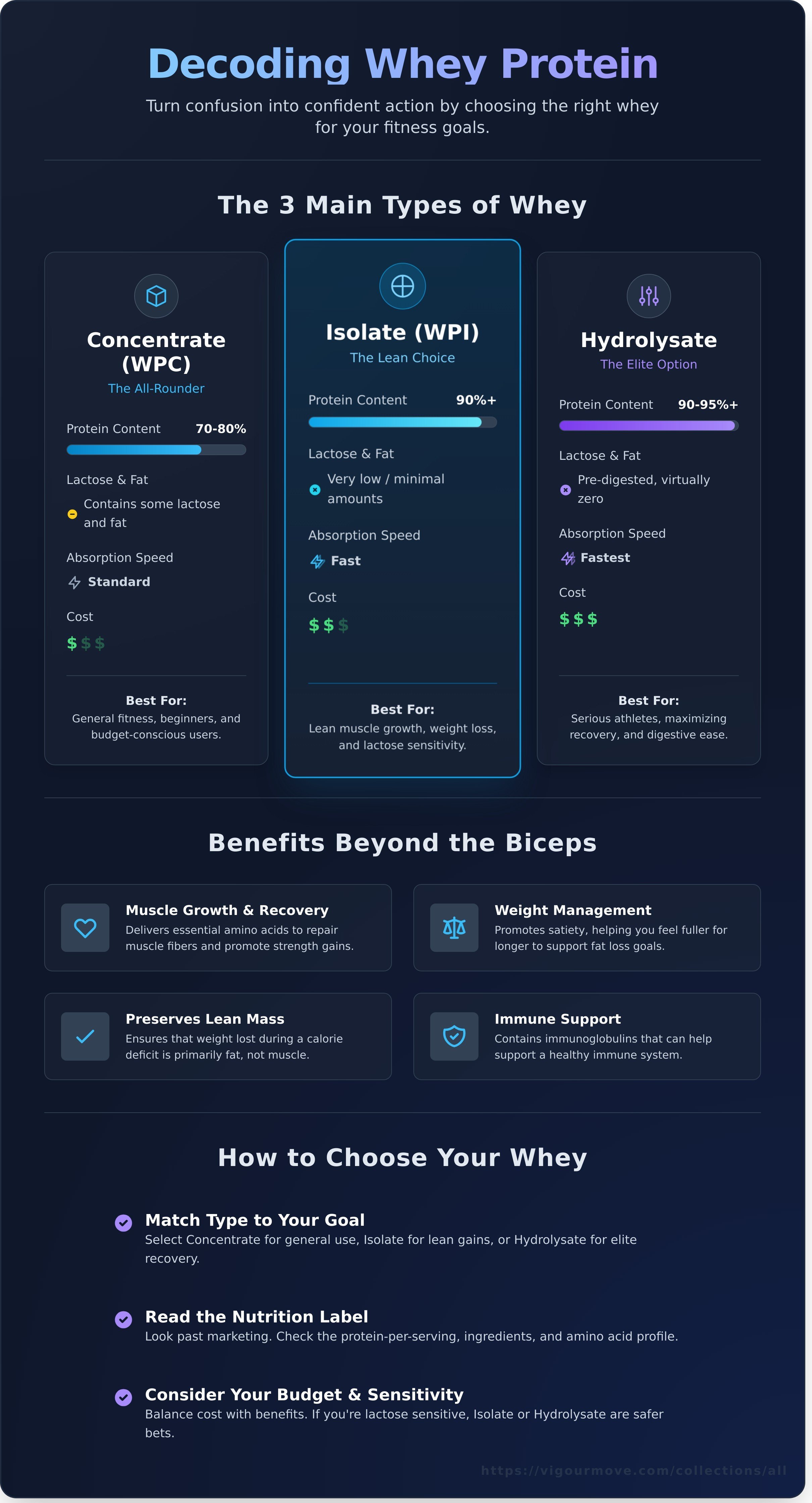
Whey Protein At-a-Glance:
- Concentrate: High Protein (70-80%) | Some Lactose | $
- Isolate: Higher Protein (90%+) | Very Low Lactose | $$
- Hydrolysate: Highest Protein & Absorption | Minimal Lactose | $$$
Whey Protein Concentrate (WPC): The All-Rounder
This is the most common and least processed form of whey. It retains more of the naturally occurring nutrients, resulting in a protein content of 70-80%, with some lactose and fat. Its well-rounded profile and creamy taste make it a fantastic starting point. It's the perfect, cost-effective choice to support general fitness goals for beginners and everyday gym-goers.
Whey Protein Isolate (WPI): The Lean Choice
Isolate undergoes an extra filtration step to remove most of the fat and lactose, boosting its protein concentration to 90% or more. This advanced filtering makes it a premium whey protein powder for serious results. With faster absorption and minimal carbs, it's the ideal choice to enhance lean muscle growth, support weight loss, or for anyone with mild lactose sensitivity.
Hydrolyzed Whey (Hydrolysate): The Elite Option
Consider this the pinnacle of protein performance. Hydrolysate is "pre-digested"-enzymes break the protein down into smaller peptides for the fastest possible absorption. This process supports extremely rapid muscle repair and can be easier on the digestive system. While it comes with the highest price tag and a slightly more bitter taste, it’s the elite choice for serious athletes and bodybuilders seeking to maximize post-workout recovery.
How to Read a Protein Powder Label Like a Pro
Flashy labels with bold claims are designed to catch your eye, but the real story of a protein powder is told on the nutritional facts panel. Learning to decode this information empowers you to see past the hype and choose a product that truly supports your goals. This is your key to unlocking real results and avoiding low-quality formulas designed to cut corners.
Serving Size vs. Scoop Size: The Real Math
Don't be fooled by a giant scoop. "One scoop" can mean 30 grams for one brand and 45 grams for another. The crucial number is the serving size in grams (g). This allows you to calculate the true protein percentage, a key indicator of quality. Simply divide the protein grams by the serving size grams. For example, a powder with 25g of protein in a 32g serving is over 78% protein-a solid benchmark for a quality product.
The Ingredient List: Quality Over Quantity
The best ingredients are always listed first. For a high-quality whey protein powder, you want to see "Whey Protein Isolate" or "Whey Protein Concentrate" at the top of the list. Be wary of:
- Fillers: Ingredients like maltodextrin or excessive thickeners add bulk and carbs without enhancing your results. The best products, like many of the recommended whey protein powders, prioritize protein purity over cheap fillers.
- Proprietary Blends: These hide the exact amounts of each ingredient, making it impossible to know what you're truly getting. Transparency is a sign of a trustworthy brand.
- Sweeteners: Note whether the product uses artificial sweeteners like sucralose or natural alternatives like stevia or monk fruit to align with your personal dietary preferences.
Decoding the Amino Acid Profile
Amino acids are the building blocks of protein. The most critical for muscle growth are the Branched-Chain Amino Acids (BCAAs): Leucine, Isoleucine, and Valine. Leucine, in particular, is the primary trigger for muscle protein synthesis-the process that repairs and builds muscle. A premium formula will often proudly display its BCAA content, with 5.5 grams or more per serving being an excellent target to support your recovery and growth.
Matching Your Whey Protein to Your Fitness Goals
Choosing the right protein isn't just about flavour; it's a strategic move to accelerate your results. The best whey protein powder for you is the one that aligns perfectly with your ambition. Think of it as the fuel designed specifically for your personal fitness engine. Let's connect the type of whey you choose to the results you want to achieve.
Goal: Build Maximum Muscle Mass
When your goal is to pack on serious muscle, speed is your ally. You need to refuel your muscles the moment your workout ends. We recommend a fast-absorbing Whey Isolate or Hydrolysate. These premium forms flood your muscles with essential amino acids right when they're most receptive to growth and repair. To truly amplify your gains, stack your post-workout shake with a high-quality Creatine to support strength and power output.
Goal: Lose Weight and Tone Up
If you're on a path to a leaner, more toned physique, your protein choice should be just as lean. Whey Isolate is your best friend here. With minimal carbohydrates and fats, it delivers a powerful dose of high-quality protein to support your goals. A shake can replace a high-calorie snack, helping you stay full and satisfied while protecting your hard-earned muscle during a calorie deficit. It’s the smart way to fuel your transformation.
For women seeking a more comprehensive nutritional strategy to complement their weight loss journey, specialized support can make all the difference. OZYR6 Health provides protocols designed specifically to guide women toward their goals.
Goal: Enhance General Health and Recovery
Not every goal is about extremes. Sometimes, you just want to support an active lifestyle and feel your best every day. For this, Whey Concentrate is a fantastic and cost-effective choice. It’s a simple, efficient way to boost your overall protein intake, ensuring your body has the building blocks it needs for daily recovery and vitality. For an extra boost of all-day energy, pair it with a quality Pre-Workout before exercise.
Ready to find the perfect fuel for your journey? Explore our full collection of wellness supplements and take the next step.
How to Use Whey Protein for the Best Results
You've chosen the right protein-now it's time to make it a seamless part of your wellness journey. Integrating a high-quality whey protein powder into your daily routine is simple, effective, and can even be delicious. These tips will help you move beyond the basics and use protein to truly enhance your results and support your ambitious goals.
Timing Your Shake: The Anabolic Window Myth
You may have heard of the "anabolic window," a supposed 30-60 minute period after a workout where you must consume protein to build muscle. While the concept is popular, modern research shows that your total daily protein intake is far more critical for growth and repair. However, a post-workout shake is still an excellent strategy. It’s a convenient way to kickstart recovery, replenish your muscles, and ensure you’re hitting your daily targets. To further enhance this process, consider pairing your shake with a dedicated Post-Workout Supplement designed to maximize recovery.
Mixing and Flavor: Tips for a Perfect Shake
Tired of clumpy, bland protein shakes? A few simple adjustments can completely transform your experience. For a perfectly smooth drink every time, follow these steps:
- Invest in a Shaker Bottle: A good shaker with a wire or plastic mixing ball is essential for breaking up clumps and creating a smooth consistency.
- Choose Your Liquid Wisely: While water works, using milk or a dairy-free alternative like almond, soy, or oat milk will give your shake a much creamier texture and richer taste.
- Start with a Classic: If you're new to protein supplements, begin with versatile flavors like chocolate or vanilla. They taste great on their own and mix well with other ingredients as you get more creative.
More Than a Shake: Creative Protein Recipes
Drinking the same shake every day can lead to "shake fatigue." The best way to stay consistent is to keep things interesting. Your whey protein powder is an incredibly versatile ingredient that can boost the nutritional value of your favorite foods.
Here are a few ideas to get you started:
- Power Up Your Breakfast: Stir a scoop of vanilla or unflavored protein into your morning oatmeal, Greek yogurt, or pancake batter.
- Create a Superfood Smoothie: Blend one scoop of protein with a frozen banana, a handful of spinach, your milk of choice, and a spoonful of nut butter for a complete, nutrient-dense meal.
- Protein-Packed Coffee: Mix a scoop of chocolate or vanilla protein into your morning coffee for a delicious, energizing start to your day.
A powerful body is supported by a sharp mind. To maintain the mental clarity needed to crush your goals, consider adding a Brain Support Capsule to your daily regimen. Discover your path to total wellness by exploring all our premium supplements today.
Your Path to Peak Performance Starts Here
Navigating the world of protein supplements is no longer a guessing game. You're now equipped with the knowledge to distinguish between whey concentrate, isolate, and hydrolysate, ensuring you can match the perfect formula to your unique fitness ambitions. By understanding how to read a label like a pro, you can confidently select a high-quality whey protein powder that fuels your body effectively and avoids unnecessary additives.
Your dedication deserves a supplement that works as hard as you do. We believe that achieving your peak potential starts with premium fuel. That’s why every VigourMoves product is meticulously formulated with high-quality ingredients designed to support your ambitious fitness goals and deliver effective, tangible results. We provide the tools so you can focus on the hard work.
Ready to elevate your performance and recovery? Discover your path to wellness with our premium supplements.
Join the VigourMoves movement towards a healthier, more vibrant life and start turning your aspirations into achievements. Your strongest self is waiting.
Frequently Asked Questions About Whey Protein Powder
Can whey protein make me bulky or gain fat?
Whey protein itself won't make you bulky or cause fat gain. These outcomes are determined by your total calorie intake and training style. Protein is a vital tool to support muscle repair and help you feel full, which can actually aid in weight management. To build significant bulk, you need a high-calorie diet and intense resistance training. Used correctly, whey protein simply helps you achieve your specific fitness goals, whatever they may be.
How much protein do I actually need per day?
Your daily protein needs depend on your activity level and goals. For a generally healthy person, the recommendation is about 0.8 grams per kilogram of body weight. If you're active and looking to enhance muscle growth, aim for 1.6 to 2.2 grams per kilogram. For a 70kg (154lb) person, that’s about 112 to 154 grams per day. A protein shake is an efficient way to help you reach that target and support your progress.
Is it safe to take whey protein every day?
Yes, for most healthy individuals, taking whey protein daily is perfectly safe. Think of it as a convenient food source designed to supplement your diet, not replace whole foods. It helps you consistently meet your protein targets, especially on busy days. As with any supplement, if you have pre-existing kidney or liver conditions, it’s always a great idea to consult with your doctor before starting a new routine to ensure it aligns with your wellness path.
Can I use whey protein if I am lactose intolerant?
It depends on the type of whey and your level of intolerance. Whey protein concentrate contains some lactose. However, whey protein isolate undergoes extra processing to remove most of the lactose and fat, making it a great option for many people with lactose sensitivity. If you are highly sensitive, a premium whey protein powder isolate is your best choice, or you could explore plant-based protein alternatives for a completely dairy-free option.
What's the difference between whey protein and casein?
The main difference is their digestion speed. Whey protein is a "fast-acting" protein, absorbing quickly to kick-start muscle repair and recovery, making it ideal for post-workout shakes. Casein, on the other hand, is "slow-acting." It digests over several hours, providing a steady release of amino acids. This makes casein a great choice before bed or between meals to prevent muscle breakdown and promote sustained growth and recovery.
When is the best time to drink my protein shake?
While the post-workout "anabolic window" is popular, research shows your total daily protein intake is more important than precise timing. Drinking a shake within an hour or two after your workout is effective for kick-starting recovery. However, a protein shake also works perfectly as a filling snack, a breakfast booster, or anytime you need to conveniently increase your protein intake to meet your daily goals and support your active lifestyle.